The Evolution of Fan Technology: Engineering the Future of Airflow
May 11, 2026
By: Brian Kreidler, Team Leader Project Engineering, ZIEHL-ABEGG Inc.
The industrial fan was once viewed as a simple, utilitarian component, a basic mechanism of blades and motors tasked with moving air from one space to another. Industry professionals understood it as a necessary but unremarkable piece of hardware.
However, modern engineering has transformed this basic utility into a highly sophisticated, precision-engineered system. The journey from crude metal blades to intelligent, biomimetic airflow solutions represents a masterclass in multidisciplinary engineering.
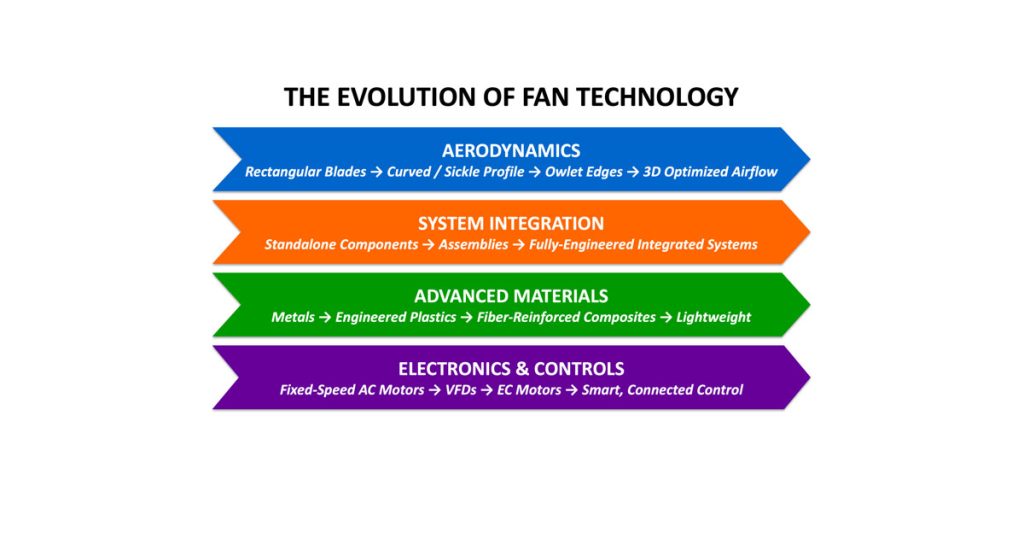
To understand the current state of airflow technology, we must examine the four parallel tracks of innovation that drove this transformation: aerodynamic design, system integration, advanced materials, and electronics. By tracing these developmental pathways, we can see exactly how modern solutions deliver unprecedented performance, acoustic efficiency, and energy savings for the world’s most demanding applications.
The Four Pillars of Fan Evolution
The transformation of air movement technology did not occur in a vacuum. It required simultaneous breakthroughs across multiple engineering disciplines. When these four pillars of innovation converged, they unlocked entirely new thresholds of performance.
Aerodynamic Design and Geometry
Early fan designs prioritized manufacturing simplicity over aerodynamic efficiency. Blades were often flat, rectangular, or featured basic curves stamped from sheet metal. While these conventional shapes could move air, they did so at the expense of high energy consumption and significant noise from turbulent airflow separation. As expertise advanced, engineers began transitioning from these rectangular profiles to progressively curved, sickle-shaped blades.
This evolution in blade geometry, informed by aerodynamic research and practical experience, dramatically improved airflow characteristics. Sickle-shaped blades create a smoother airflow path, reducing turbulence and significantly lowering noise levels while enhancing energy efficiency.
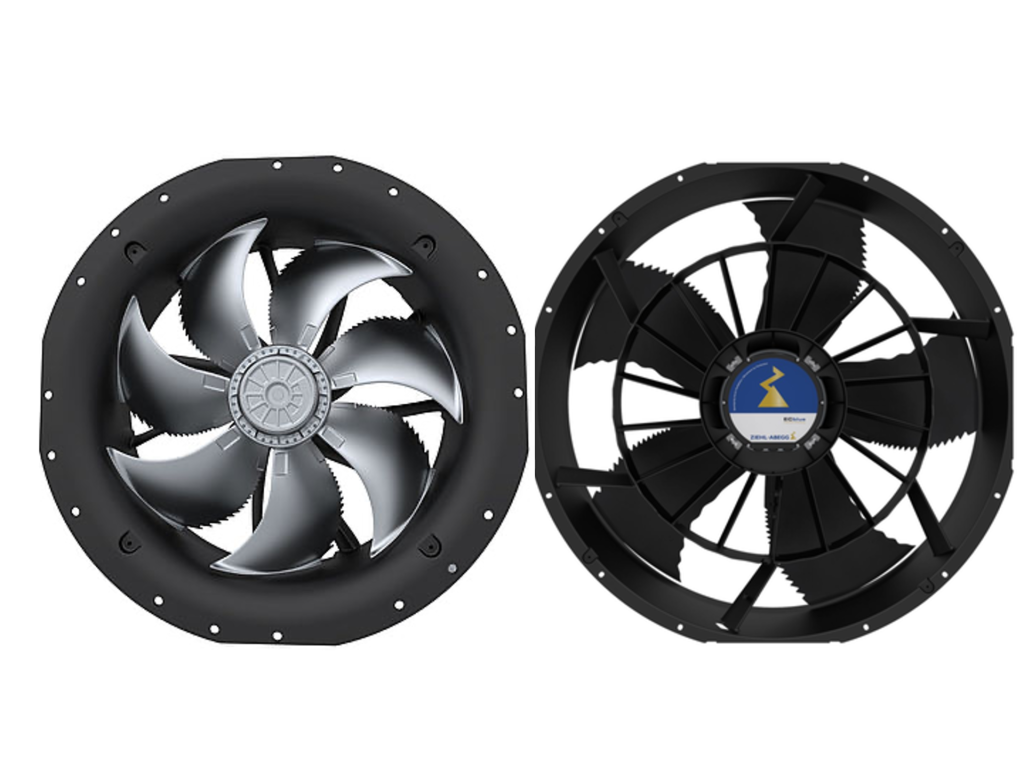
Another breakthrough came when engineers began looking beyond traditional mechanics and toward the natural world, a field known as bionics or biomimicry. By studying the silent flight of owls, designers realized that trailing-edge serrations could break up acoustic waves and dramatically reduce noise profiles.
Modern fan geometry now utilizes complex, three-dimensional blade sweeps. These precise curves ensure that air remains attached to the blade surface for as long as possible, reducing turbulence and the energy-draining vortexes that form at the blade tips. Furthermore, the integration of precisely engineered guide vanes and optimized housings ensures that airflow is directed precisely where needed, converting dynamic pressure into useful static pressure.
System Integration: From Components to Cohesive Units
Historically, an industrial fan system was assembled piecemeal. A contractor might source a motor from one manufacturer, an impeller from another, and mount them both into a generic housing. This fragmented approach virtually guaranteed inefficiency. The motor was rarely optimized for the impeller’s specific aerodynamic load, resulting in wasted energy, excess heat, and shortened operational lifespans.
The paradigm shifted with the move toward complete system integration. Engineers recognized that the housing, motor, impeller, and control electronics must be developed together as a single, symbiotic unit.
When a fan operates as a cohesive system, the clearance between the blade tips and the housing can be reduced to mere millimeters. This minimizes air recirculation, where air slips backward over the blade tip, thereby maximizing efficiency. Integrated systems also enable precise thermal management, in which the fan-generated airflow actively cools the motor and electronics, increasing reliability.
Advanced Materials: Lighter, Stronger, Quieter
The material composition of fan systems has undergone a radical evolution. For decades, aluminum and steel were the default materials. While durable, these metals are heavy, requiring substantial starting torque and consuming significant energy simply to maintain rotational momentum. Furthermore, metal blades are susceptible to corrosion in harsh environments and tend to transmit mechanical vibrations, increasing system noise.
The introduction of advanced, high-performance composite materials changed the landscape. High-tech polymers and glass-fiber reinforced plastics offer incredible tensile strength at a fraction of the weight of traditional metals.
These lightweight materials require far less energy to accelerate and maintain speed. They also enable the manufacture of complex, biomimetic blade shapes that would be impossible or cost-prohibitive to cast in metal. Additionally, composite materials possess excellent internal damping characteristics. They absorb vibrations rather than transmitting them, resulting in significantly quieter operation. They are also inherently resistant to corrosion, making them ideal for demanding environments ranging from coastal HVAC installations to caustic industrial exhaust systems.
Electronics: The Brains Behind the Brawn
Perhaps the most significant leap in fan technology has been the evolution of the drive mechanism. Traditional AC (Alternating Current) motors operate at a fixed speed, relying on mechanical dampers or inefficient frequency inverters to modulate airflow. This meant systems often ran at full capacity even when demand was low, wasting vast amounts of electricity.
The game-changer was the widespread adoption of EC (Electronically Commutated) technology. EC motors are synchronous motors powered by an integrated electronic brain. They convert AC mains power into DC voltage, then intelligently commutate current to the motor windings to achieve the exact required speed.
EC technology allows fans to operate at peak efficiency across their entire speed range. Furthermore, the integration of microprocessors means modern fans are no longer deaf and blind. They can connect to building management systems via MODBUS or other digital protocols. They can monitor their own operating temperatures, track vibrations, and adjust their speed in real-time based on input from external pressure or temperature sensors.
ZAplus Next Generation: The Culmination of Engineering Excellence
ZIEHL-ABEGG, a global leader in ventilation, control, and drive technology, has been at the forefront of this transformation, helping set new benchmarks for efficiency, reliability, and acoustic performance. If modular arrays represent a leap in system architecture, then the ZAplus Next Generation system represents the current peak of individual fan engineering. It stands as a testament to what is possible when aerodynamics, system integration, advanced materials, and electronics are synthesized without compromise. Developed by ZIEHL-ABEGG, ZAplus embodies the company’s expertise in creating highly efficient, low-noise air movement solutions for a wide range of applications.
The ZAplus is not merely a fan; it is a highly engineered, multifunctional air movement system. The design eliminates the traditional component-based approach. The impeller, the EC motor, and the guide vanes are fully integrated into a specialized, aerodynamically optimized housing crafted from high-strength composite materials.
From an aerodynamic standpoint, the system incorporates complex bionic blade designs inspired by the owl’s silent flight, ensuring maximum airflow with a minimal acoustic signature. The integrated guide vanes capture the swirling air leaving the blades and straighten it, converting turbulent dynamic pressure into focused, highly efficient static pressure.
Because the housing and the blades are engineered together using advanced injection-molded composites, the tip gap is practically nonexistent. This precision eliminates the inefficient air recirculation that plagues lesser designs. The brains of the operation, a state-of-the-art EC motor, is seamlessly integrated into the hub, utilizing the active airstream to maintain optimal operating temperatures, ensuring longevity and consistent performance.
The ZAplus illustrates that airflow technology has evolved far beyond simple utility. It is a highly refined instrument designed for maximum efficiency, offering wide applicability across the most demanding sectors. As a result, ZIEHL-ABEGG’s ZAplus platform has become a preferred choice for OEMs and system designers seeking dependable, future-ready fan technology.
Unlocking the True Potential of Fan Arrays
In the evolution of commercial air handling, the advent of fan arrays has marked a major leap forward. Rather than relying on a single, large fan, a fan array leverages multiple compact, high-performance fan units working in unison. This design not only delivers superior redundancy, ensuring uninterrupted airflow even if one fan requires servicing, but also enhances energy efficiency and system resilience, which have become decisive factors in today’s high-demand environments.
Modern multimotor plenum fan solutions built around ZIEHL-ABEGG fan technology make it possible to create modular, lightweight assemblies that simplify installation and retrofits. Their modular, lightweight design enables technicians to hand-carry and efficiently install complete, ready-to-run packaged fan assemblies, dramatically reducing installation time and disruption, even in the most challenging, hard-to-access sites, avoiding the cost and disruption of renting cranes or cutting holes in building walls to replace massive, single-motor fans.
Crucially, these capabilities are enabled by ZIEHL-ABEGG’s ZAplus fan unit at the core of these arrays. The integration of advanced aerodynamics, high-strength composite materials, and intelligent EC motor technology in ZAplus means each array delivers unparalleled performance with ease of installation and long-term reliability, transforming how air handler upgrades and system resilience are achieved.
The New Era: Versatility and Universal Application
The ZAplus platform is more than the culmination of decades of fan engineering, it is the launchpad for a new era defined by versatility and universal application. Unlike earlier solutions that required trade-offs specific to the environment or use case, every aspect of the ZAplus has been engineered for broad compatibility and high performance, regardless of context.
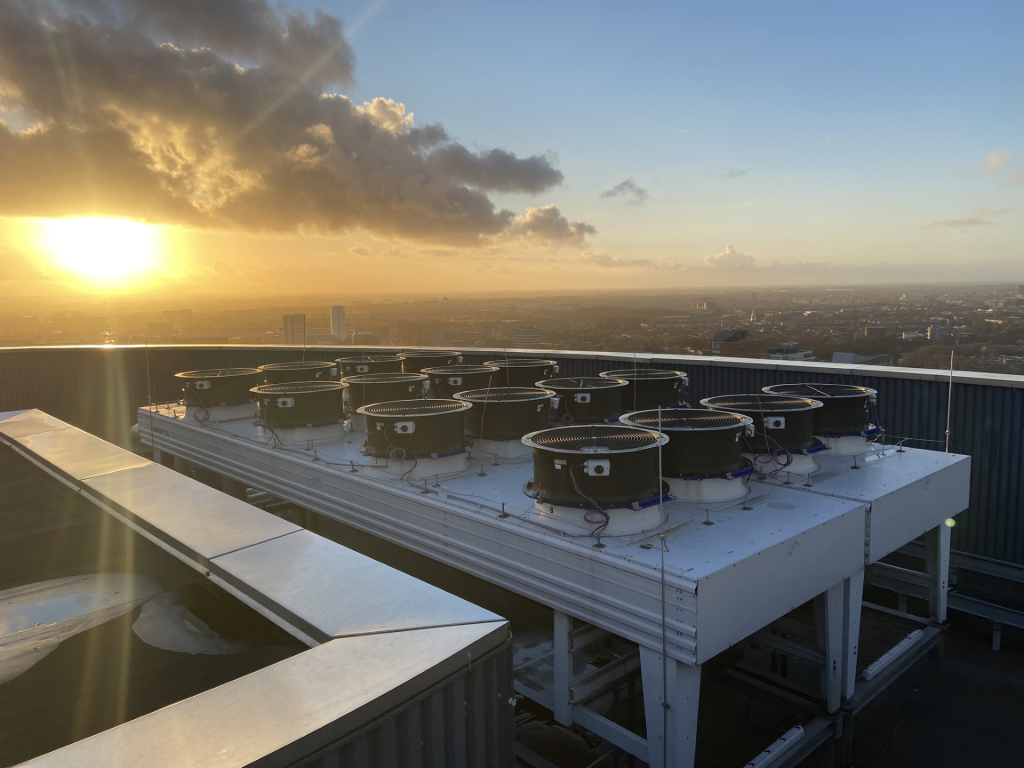
Versatility is embedded in every design decision, from blade geometry and materials to housing and controls. The fan is as at home on a dense, space-constrained data center floor as it is exposed on a rooftop chiller, operating with equal reliability in corrosive industrial environments or in sound-sensitive commercial and residential settings. This universal approach delivers high efficiency, low noise, and long service life in a single, cohesive package.
For OEMs and system integrators, this unified design simplifies product lines and reduces integration risk. Instead of sourcing disparate components and engineering them to work together, the industry now benefits from a complete, pre-engineered fan system, one that elevates performance, streamlines installation, and ensures consistency across applications.
ZAplus stands as the new industry benchmark: a “do-everything” fan, robustly tested and continuously refined across thousands of demanding installations. Its adaptability delivers measurable benefits to facility owners, engineers, and OEMs alike, empowering them to meet specific needs today while remaining agile in the face of tomorrow’s challenges. Through solutions like ZAplus, ZIEHL-ABEGG demonstrates how a single platform can address multiple market requirements without sacrificing performance.
In the evolution of commercial air handling, the advent of fan arrays has marked a major leap forward. Rather than relying on a single, large fan, a fan array leverages multiple compact, high-performance fan units working in unison. This design not only delivers superior redundancy, ensuring uninterrupted airflow even if one fan requires servicing—but also enhances energy efficiency and system resilience, which have become decisive factors in today’s high-demand environments.
Real-World Impact Across Industries
The evolution culminating in systems like the ZAplus has profound implications for global infrastructure. High-performance air movement is the invisible backbone of modern industry.
Data Centers and Critical Cooling
As global reliance on cloud computing and artificial intelligence grows, data centers are generating unprecedented heat loads. Traditional cooling systems cannot keep pace with the power density of modern server racks. High-performance, integrated fan systems deliver precise, targeted airflow with the absolute reliability that critical IT infrastructure demands. The high efficiency of EC technology is crucial here, as cooling often accounts for up to 40% of a data center’s total energy footprint.
Commercial HVAC Systems
In commercial real estate, building owners face stringent energy efficiency regulations and a growing demand for optimal indoor air quality. By retrofitting aging infrastructure with modern, biomimetic fan arrays, facilities can dramatically reduce their HVAC energy consumption while simultaneously lowering acoustic pollution, creating a more comfortable and productive environment for occupants.
Advanced Refrigeration and Cold Chain
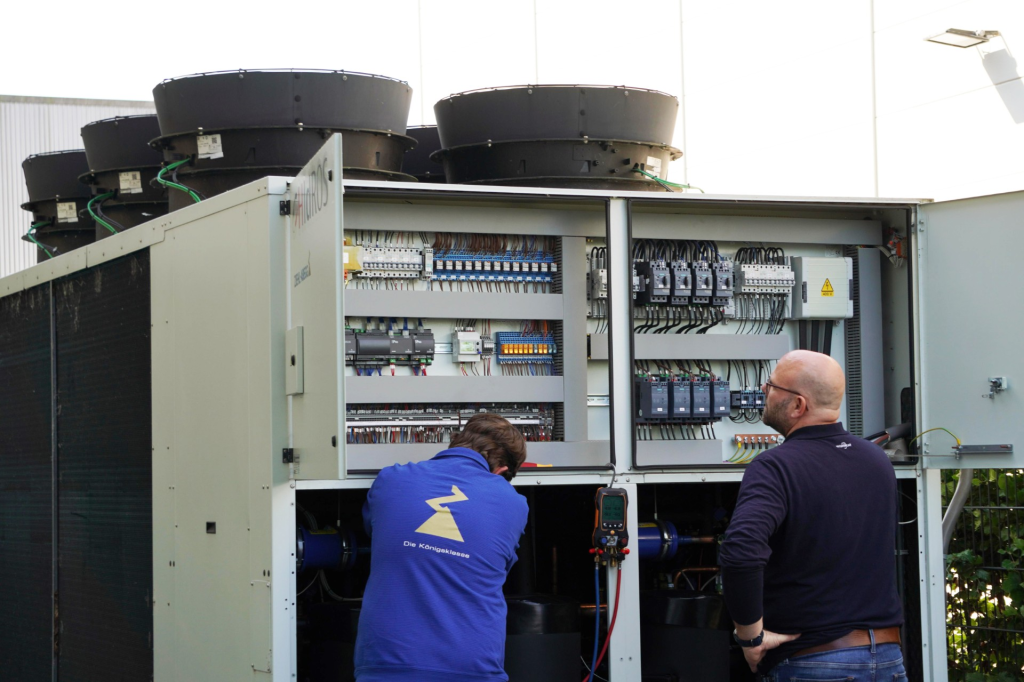
The global food supply and pharmaceutical industries rely on an unbroken cold chain. Evaporators and condensers in these systems require fans that can operate flawlessly across extreme temperature variations without icing or mechanical failure. The use of corrosion-resistant advanced materials and intelligent motor controls ensures that these critical systems maintain precise temperatures with uncompromising reliability.
Engineering the Future of Airflow
The evolution of fan technology showcases significant engineering progress. By moving from a component-by-component approach to one that integrates aerodynamic bionics, advanced materials, and intelligent EC electronics, the industry has redefined performance standards. The ZAplus system is the culmination of decades of research, integrating innovations in blade design, controls, and materials to create a versatile platform. Engineered for peak efficiency, low noise, and longevity, it performs reliably across diverse operating environments, from industrial sites to commercial spaces. This pre-engineered, field-validated system offers a standardized solution for a wide variety of applications without requiring major redesigns. As an innovation leader in ventilation, control, and drive technology, ZIEHL-ABEGG continues to push the boundaries of what fan systems can achieve, helping customers engineer the future of airflow with confidence.