

Power, Cooling, and Sustainability: Solving the 2026 AI Data Center Energy Crunch
August 10, 2026
If you spend any time around data center projects in 2026, you hear the same phrase over and over: “We could build it if only we could get the power.” Demand for AI is strong. Land is often available. Network routes can be engineered. But in many markets, the grid is the hard limit, and AI workloads are pushing up against it.
At the same time, the industry faces more scrutiny than ever. Communities are asking why data centers should receive priority access to electricity and water. Policymakers are trying to reconcile climate goals with the desire to remain competitive in AI. Investors and customers want growth, but they don’t want reputational or regulatory blowback. This is the backdrop for what many call the AI energy crunch.
For practitioners, the question isn’t “Is this real?” It’s “How do we keep building and operating in this environment without overpromising or stalling?” That’s what this article focuses on.
AI’s Impact on Power Demand
AI has changed the numbers. A single large training cluster can draw tens of megawatts on its own. That’s before you factor in supporting infrastructure and other workloads. When a few of these clusters land in the same region, local planners start to worry about what happens on hot days, during dry seasons, or when other industrial users want to expand. Unlike many traditional workloads, these clusters can run at full capacity for extended periods. That reduces the impact of diversity in your load calculations. You can’t assume that everything won’t peak at once. If three major customers start training runs on the same day, you need to be prepared.
This is one reason utilities and regulators are scrutinizing new data center proposals more closely now. They’re being asked to approve loads that are large, persistent, and politically visible, often in grids that already have deferred maintenance or ambitious decarbonization targets. In that context, how you frame your project and the evidence you present about how it will behave over time really matter.
When the Grid Becomes the Constraint
For a long time, land and planning permission were the headline challenges. Today, in many markets, the grid is the bigger challenge. It’s not just generation; it’s the transmission and distribution infrastructure that delivers power from where it’s produced to where you want to build.
Queue times for large industrial connections have increased. Local substations may be at or near their comfortable limits. Long‑distance lines that could support additional load are years away, if they’re planned at all. Against this backdrop, multiple operators and heavy industries are competing for the same capacity.
In practice, this changes how you evaluate sites. You can’t just check a box labeled “proximity to substation” and move on. You need to understand what’s actually available, what upgrades would be needed, and where your project ranks in the local priority order. Working closely with the utility early, rather than treating it as a final hurdle, often makes the difference between a workable timeline and a project that drifts indefinitely.
It also means that “good enough” locations with faster paths to power may outperform “perfect” locations that are held up by years of grid upgrades. Speed to power becomes as important as cheap land or tax incentives.
On‑site and Near‑site Power: More than a Backup Plan
As grid constraints bite, more operators are seriously considering generating at least some of their own power or securing it very close to their sites. This isn’t a new idea as data centers have used generators and UPS systems for decades. However, the scale and intent are different now. Instead of relying solely on emergency backup, some designs incorporate gas‑fired plants, large‑scale batteries, or both as part of the primary solution. The goal might be to reduce dependence on constrained parts of the grid, to smooth demand, or to better match power use with the output of nearby wind or solar assets.
Doing this well is nontrivial. You enter a world of air permits, emissions limits, fuel logistics, and market participation rules. You also need a solid operational plan: who runs this plant day to day, how do you coordinate with the utility, and what happens when one source is unavailable?
That said, for certain projects and markets, on‑site or near‑site power can be the key to unlocking growth. It can also give you more control over your long‑term cost base and carbon trajectory, especially if you can tie it to low‑carbon generation over time.
Cooling: Stretching Air, Adopting Liquid
Cooling is the other half of the equation. Power in becomes heat out. With AI clusters, both the rate and concentration of heat are higher than many older designs were built to handle.
On the air side, the industry has become adept at squeezing efficiency from familiar systems. Containment, variable‑speed fans, better controls, and smarter layouts all help. In some environments, you can raise supply temperatures and use more free cooling than you might have dared to ten years ago.
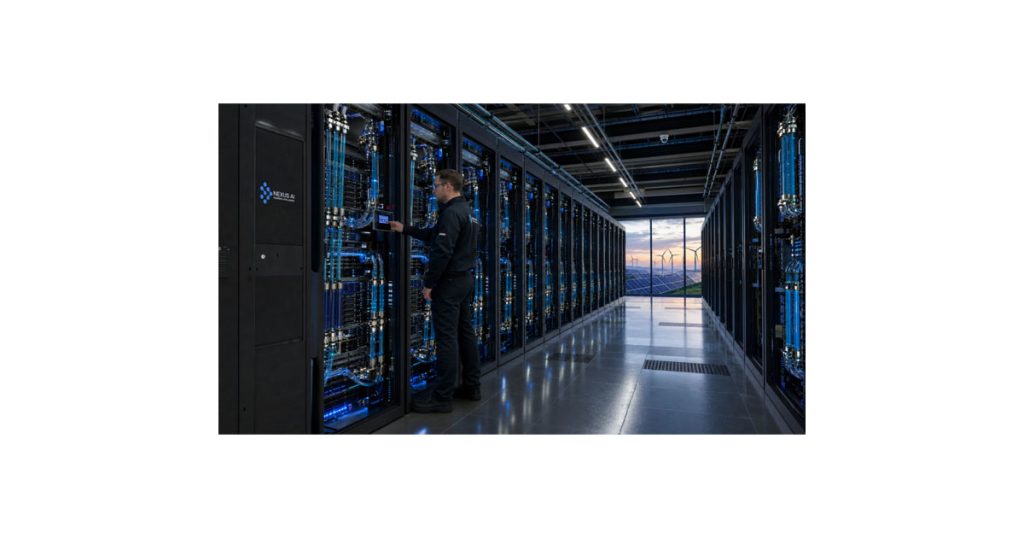
But at a certain density, air cooling struggles. Moving more air through tighter spaces becomes noisy, energy‑intensive, or simply impractical. That’s where liquid cooling comes in. Direct‑to‑chip systems remove heat from the hottest components using liquid loops and heat exchangers. Immersion systems go further, submerging entire boards or systems in specially designed fluids.
Adopting liquid cooling isn’t just a procurement decision. It affects your mechanical rooms, piping, maintenance routines, and risk posture. It also changes conversations with customers. Do they bring hardware designed for liquid cooling, or do you provide it? How do you support mixed environments where some racks are air‑cooled and others are not?
Most practitioners end up with a portfolio view: some facilities remain mostly air‑cooled; others adopt hybrid schemes; a few are intentionally optimized for liquid cooling for AI. The trick is not to treat liquid cooling as a one‑off experiment but to think about how it scales over years and across customers.
Rethinking Efficiency and Sustainability Metrics
Because AI pushes so hard on power and cooling, it also exposes the limitations of some of the metrics the industry has relied on. PUE remains a useful basic efficiency indicator, but it doesn’t tell you when you use power, what kind of power it is, or how much useful work you get from it. Two sites can share a PUE yet differ wildly in carbon intensity or in the amount of AI work they deliver per megawatt.
As scrutiny increases, you’re more likely to be asked about:
- The carbon profile of your power mix over time, not just annual averages.
- How much water do you use, and what happens to it?
- Whether you are making use of waste heat rather than simply rejecting it to the atmosphere.
You don’t need a perfect dashboard on day one, but you do need credible data and a path toward greater transparency. That starts with metering and monitoring. If you can’t measure at a useful level of granularity, you can’t manage or explain your impact effectively.
Communities, Regulators, and the “Right to Grow”
The social license to operate is becoming as important as technical capability. In some areas, residents are asking why data centers receive priority during constrained periods, why they are located near homes or farmland, and what the local community receives in return.
Regulators, in turn, are under pressure to impose conditions, such as limits on water use, requirements for heat reuse, expectations regarding renewable energy, or commitments to local infrastructure improvements. Some jurisdictions are tightening rules on where and how much you can build; others are using incentives to steer development to specific zones.
Operators who treat this as an afterthought, handled by a small team late in the process, often find life difficult. Those who show up early, explain clearly, and make tangible commitments often receive more stable approvals and less opposition. That might mean investing in local grid upgrades, supporting community projects, or agreeing to share waste heat with municipal networks where it makes sense.
For practitioners, the key point is that community and regulatory strategy now belong on the same slide deck as power and cooling when planning a new build or a major expansion.
A Practical Way Forward
Given all these constraints, it’s easy to feel stuck. But much of the work comes down to sequencing and honesty.
Start by building a clear picture of your current and projected loads – including AI and non‑AI – over the next few years. Then map them against what your existing sites and power contracts can deliver, without wishful thinking. You’ll quickly see which sites can support meaningful AI growth and which are already constrained.
Next, review your cooling story. Where can you get more from what you have with smarter controls and minor upgrades? Where do customers or roadmaps clearly point to densities that will require liquid cooling? Use that to shape your investment priorities: not every site needs to be state‑of‑the‑art; some just need to be honest about their limits.
In parallel, decide how far you want to go with your power strategy. Are you prepared to own or co‑own generation assets? Do you want to sign long‑term agreements tied to specific renewable projects? Or is your focus on negotiating better positions with utilities and working within the grid as it is? Each approach carries different risk and skill implications.
Finally, bring stakeholders into the loop sooner. Utilities, regulators, and local communities all prefer fewer surprises. If you can tell a consistent story, “Here’s our load, here’s our efficiency plan, here’s how we’ll manage impact, here’s what we’re bringing to the region,” you reduce friction and create room to grow.
The AI energy crunch isn’t going away, but it doesn’t have to be a brick wall. For operators and builders willing to rethink power, cooling, and sustainability together, it can become a forcing function for better engineering and stronger relationships. Those are the players who will still be adding capacity five and ten years from now, while others discover that “we’ll find the power later” wasn’t a plan.