Automotive Panel Market Thrives Despite Tariff Uncertainty
Barbara Jorgensen, Contributing Editor at Panel Builder US explores how U.S. tariffs have increased costs and demand for automotive control systems.
Hammond Power Solutions Inc. has recently announced that it has signed a definitive agreement to acquire AEG Power Solutions, subject to regulatory approvals and customary closing conditions. AEG Power Solutions is a global manufacturer of mission critical industrial power electronics serving a diverse set of markets, including industrial facilities, transportation, infrastructure, and energy applications. Operating primarily across Europe and Asia, AEG Power Solutions employs more than 780 professionals and operates five manufacturing facilities worldwide, with approximately C$326 million in revenue in 2025.
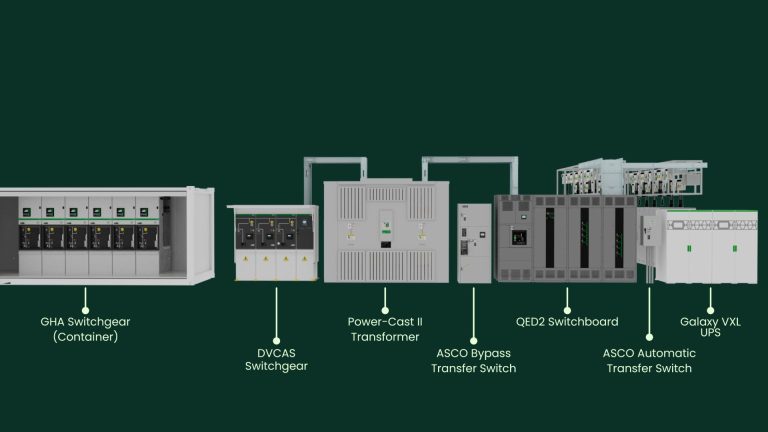
The AI era is colliding with the physical limits of data center infrastructure. Workloads that once ran quietly on CPUs now demand GPU-dense clusters, unprecedented power density, and continuous cooling, all at a moment when energy, water, and carbon constraints are tightening. For data center owners and operators, the challenge is no longer just scaling for data center needs. It’s doing so more responsibly, more reliably, and at scale.
Designing large, complex machines involves multiple disciplines, including electrical systems, fluid power circuits, and production planning. The challenge is coordinating these areas efficiently while maintaining accuracy and compliance. Eplan provides a full stack engineering environment that addresses these needs through structured, interconnected workflows and automation that goes well beyond schematics.
Russelectric, A Siemens Business, highlights its Advanced Microgrid Controls Solution, an integrated hardware and software platform designed to optimize facility power management and enhance resiliency in critical sectors. This comprehensive solution may present significant benefits, including energy cost reduction, carbon footprint minimization, and improved business continuity during grid outages.
When specifying electrical enclosures for wet or outdoor environments, understanding NEMA ratings ensures equipment protection and longevity. Two commonly specified ratings—NEMA 6 and NEMA 6P—offer robust water protection, but knowing the distinction can prevent costly equipment failures or over-specification. NEMA 6 is a rating established by the National Electrical Manufacturers Association indicating an enclosure’s ability to protect electrical equipment in wet locations. This rating confirms that an enclosure can withstand rain, washdowns, and temporary submersion in water.
NEMA 4 and NEMA 4X are two of the most commonly specified enclosure ratings, and on the surface, they look nearly identical. They share a lot of common ground, but there’s one critical distinction that can make or break a design in the wrong environment. NEMA 4X does everything NEMA 4 does, and then it adds one more layer of protection: corrosion resistance. That single addition is what sets the two ratings apart, and it’s more significant than it might initially sound.
Variable frequency drives are a hot topic. Advancements in VFD technology and reductions in price are driving rapid market adoption. Dramatic energy savings can deliver a payback period measured in months, and VFDs enable precise motor control in many industrial process applications. But VFDs are also hot in the literal sense: the advanced electronics pack more semiconductor components into a smaller form factor resulting in more intense heat generation. Elevated temperatures degrade performance, impair operational reliability and shorten service life.
Often overlooked as a power distribution option in industrial control panels, busbars offer an impressive combination of cost-effectiveness, safety, space savings and adaptability.
By Josiah Haas, President, Bud Industries – When electronic equipment fails unexpectedly in industrial facilities, the culprit is often invisible: heat. The traditional rule of thumb states that for every 10 degrees Celsius increase in temperature, the life of electrical equipment is cut in half—a sobering reminder that enclosure thermal management directly relates to a company’s survival. This thermal reality hits hardest in manufacturing facilities, where hundreds of thousands of dollars in high-performance drives and electronics keep production running. Without proper thermal management plans, these critical assets face premature aging and catastrophic failures.
One of the biggest benefits with modular enclosures is how they simplify and accelerate configuration and installation in service of helping companies reduce lead times and navigate labor shortages. Plus, the modular design of such enclosures helps reduce your bill of materials (BOM) and makes it easier to maintain enclosures in the field. However, it can be a challenge finding a modular enclosure that marries this level of flexibility with the required durability and rigidity necessary for deployment in more intense or extreme industrial applications. This kind of enhanced protection was usually reserved for unibody enclosures, but Rittal’s new VX Hybrid Double Door enclosure changes the game, providing exceptional durability and rigidity without complicating the configuration and installation process.
By Moises Abreu, Business Development Manager, Rittal – The move away from traditional cabling and toward busbar continues, and many panel shops I’ve talked to lately are facing challenges with keeping up with demand. Their customers increasingly want copper busbar, and it’s no surprise. For high-amperage systems, such as those above 1000A, they can’t use cables because they’ll melt. Copper is a great conductor of electricity that handles heat well and helps suppliers in fields like energy & power meet safety standards like UL 891.
Rockwell Automation, Inc. kicked off the 34th annual Automation Fair on November 17 in the Windy City. More than 15,000 engineers, makers and industry providers have come together to explore the technologies and solutions driving the future of industrial operations. This year’s theme, Create What’s Next, highlights the power of turning bold ideas into real-world impact as companies build more resilient systems, embrace sustainability and simplify operations on the plant floor.
Industry moves fast. Outpace obsolescence with OMRON’s Sysmac Studio. Designed to empower operations from the edge to the cloud, it unifies automation by prioritizing safety and security. Built for today, ready for the future. Today, the factory floor faces pressure from suppliers, consumers, competition, and emerging technologies. Operation teams are looking to remain competitive while making resilience standard procedure. At the crux of resilience and a sustainable competitive advantage is confident decisions driven by data-based insight.
By Josiah Haas, President, Bud Industries – Sensitive electronic equipment is vulnerable to relentless attacks from the elements when deployed outdoors. Rain penetrates vulnerable circuits, dust clogs vents, UV radiation degrades plastic components, and temperature fluctuations stress delicate connections. Without adequate protection, expensive electronics that are designed to operate for years can fail within months, resulting in costly replacements, emergency repairs, and critical system downtime. This is where weatherproof enclosures become indispensable.
Cable management planning can be a time-consuming process that requires considerable skill. Engineers need to choose the right type, length, and part number of the cables between the machines and the control cabinet and place them correctly. When Machine Builders use standard products, they select the cable lengths to order from lists of off-the-shelf cables. Unfortunately, purchasing the wrong cable length is common and remains a significant cost driver in machine building. It also extends lead times and increases waste, because of this cable management planning is usually undertaken by skilled and experienced electrical engineers, making it an expensive and resource-intensive process.