Thirsty Servers: The Water Crisis Sparked by Data Center Cooling
March 20, 2026
By Garth Miller
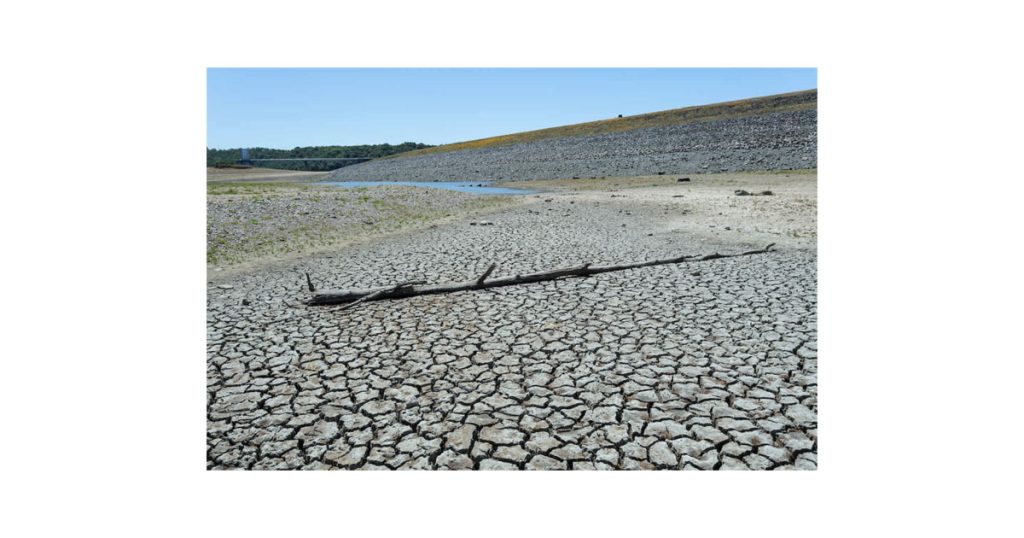
The Data Center Water Paradox
Industry analysts now forecast that American data centers could use up to 136 billion gallons of water annually by 2028, a potential fourfold rise driven by artificial intelligence’s insatiable appetite for computing power. Imagine a single 1-megawatt facility consuming over 25 million litres each year, enough to supply hundreds of thousands of people daily. As rack densities increase towards 50 kilowatts per unit, the digital infrastructure supporting modern progress risks colliding headlong with the planet’s natural limits.
This paradox highlights the technology sector’s biggest sustainability challenge: how can high-tech become environmentally friendly when hyperscale growth risks draining local water sources? The solution involves a complete rethinking of data centre cooling already in progress among the world’s largest cloud providers.
A Brief History: From Mainframes to Modern Crisis
Computing’s relationship with water dates back to the earliest mainframes. In the 1960s, IBM’s System/360 used water-cooled heat exchangers when air cooling could not keep pace with rising power densities. As chips became more efficient through the 1970s and 1980s, air-based cooling dominated for decades, and liquid systems retreated to niche supercomputing applications.
The resurgence started with cloud computing’s explosive growth in the mid-2000s. Hyperscale operators found that evaporative cooling—spraying water into airflow to absorb heat—brought significant improvements in energy efficiency. Google’s sprawling campuses led the way with this method, achieving industry-leading power usage ratios that slashed electricity bills.
The hidden cost? Evaporative systems permanently consume about 80 percent of the water drawn, losing it to the atmosphere rather than recycling it. What started as energy optimization created an entirely new category of industrial water demand—one reaching crisis levels as artificial intelligence workloads push thermal loads to unprecedented levels.

The Vendor Playbook: Different Paths to Water Efficiency
Microsoft: Zero Water, Maximum Impact
Microsoft made headlines in 2024 by implementing a groundbreaking zero-water cooling design. This closed-loop liquid cooling system saves up to 125 million litres annually per facility by circulating coolant within sealed networks that never release to the atmosphere. Once filled during construction, the system operates indefinitely without requiring additional water input.
The technological breakthrough places coolant in direct contact with heat-generating chips through precision-engineered cold plates. Instead of cooling entire rooms, the system targets heat at its source, operating at higher temperatures to enhance efficiency while maintaining optimal chip performance. Real-world deployments now operate in arid Phoenix, Arizona, and water-stressed Wisconsin—precisely the regions where traditional evaporative cooling causes the most significant community tensions.
Google: Efficiency Through Strategic Water Use
Google’s cooling philosophy prioritizes energy efficiency, accepting higher water use in exchange for industry-leading power ratios of 1.10—meaning only 10 percent of total facility energy goes to non-computing overhead. The company’s designs extensively employ waterside economizers that bypass mechanical chillers when ambient conditions permit, significantly reducing electricity consumption.
The most innovative deployments exploit local environmental conditions. Google’s Finnish data center draws seawater directly from the Baltic Sea for cooling without consuming freshwater. The Belgian campus operates entirely without chillers, relying instead on massive evaporative cooling towers. The company has committed to replenishing 120 percent of consumed water by 2030 through watershed restoration projects and reclaimed wastewater initiatives—though critics note these programs cannot fully address withdrawals from already stressed aquifers in regions like Arizona.
AWS: Hybrid Flexibility and Rapid Deployment
Amazon Web Services developed its cooling strategy around a key constraint: the necessity to quickly expand artificial intelligence infrastructure within existing air-cooled facilities. The company’s In-Row Heat Exchanger system combines direct-to-chip liquid cooling for high-density GPU racks with conventional air cooling for network and storage components.
This hybrid approach allows AWS to retrofit liquid cooling into operational data centers with minimal disruption, avoiding the multi-year timelines needed for entirely new construction. The company developed the entire system—including custom coolant distribution units and proprietary cooling fluids—in just 11 months, showing how urgently hyperscalers see the cooling challenge. AWS also tackles consumption through alternative sourcing, cooling dozens of facilities using treated sewage rather than potable water.
Meta: Restoration and Community Partnership
Meta’s Mesa, Arizona data center sets a benchmark with 60 percent improved water efficiency compared to average facilities. The company achieves this through advanced recirculation systems that cycle water multiple times before discharge, with wastewater then directed to agricultural use. Beyond technology, Meta has invested in restoration projects delivering over 200 million gallons of water annually to the Colorado River and Salt River basins.
These initiatives repair irrigation systems and fund ecosystem restoration in regions where facilities operate. However, elsewhere, challenges persist: construction near Atlanta caused local well failures for nearby residents, exemplifying the delicate balance between industrial growth and community resources.
Standardization: Rules for Managing Scarcity
Industry standards prove vital for scaling cooling technology and avoiding vendor lock-in. The American Society of Heating, Refrigerating, and Air-Conditioning Engineers has gradually broadened allowable operating temperature ranges, helping facilities to cut cooling energy use and making liquid cooling viable for mainstream applications.
These evolving guidelines now cover direct-to-chip systems, rear-door heat exchangers, and immersion cooling—formalizing what was previously experimental only a few years ago. The specifications specify thermal interfaces, coolant types, flow rates, and pressure requirements vital for ensuring compatibility between servers from different manufacturers and cooling systems from various sources.
Water Usage Effectiveness—measured in litres per kilowatt-hour—has become the key benchmark for comparing different cooling methods. Microsoft’s zero-water systems approach 0 litres per kilowatt-hour, while traditional evaporative cooling usually ranges from 1.0 to 2.5 litres per kilowatt-hour. Without such metrics, operators cannot make well-informed decisions about trade-offs between water consumption, energy efficiency, capital costs, and operational aspects.
The Numbers: Crisis and Opportunity
Water consumption statistics highlight both crisis and opportunity. In 2023, American data centers used 17 billion gallons directly for cooling—equivalent to the annual water needs of millions of households. Indirect consumption through electricity generation reached 211 billion gallons, mainly from thermoelectric power stations that require water for steam production.
Direct cooling use is expected to double or quadruple by 2028, depending on how rapidly the industry adopts new technologies. The scale is evident in individual facility consumption: a single medium-sized 15-megawatt facility consumes as much water annually as three average hospitals or more than two 18-hole golf courses.
On the market side, investments in cooling systems are soaring. Analysts predict that the global data center cooling market will grow from roughly 13 billion dollars in 2025 to as much as 30 billion dollars by 2030. Liquid cooling segments demonstrate even more aggressive growth, with immersion cooling markets increasing at 18 percent annually. As demand for artificial intelligence workloads rises by 33 percent each year, liquid cooling becomes the only cost-effective method for maintaining performance at scale.
Manufacturing and Supply Chains: Where Cool Tech Comes From
The liquid cooling supply chain spans established infrastructure giants and agile technology startups, with North American manufacturing becoming strategically vital as hyperscale operators emphasise supply chain resilience. Major players operate multiple facilities across the United States, producing power systems, cooling equipment, and integrated solutions covering both traditional air conditioning and advanced liquid cooling solutions.
Specialist manufacturers have based their headquarters and primary manufacturing facilities in Texas, with rapid growth driven by demand for immersion cooling systems that achieve over 300 kilowatts of compute density per tank while using no water. Recent acquisitions have provided smaller innovators access to extensive North American production capacity, with established manufacturing firms viewing liquid cooling as a strategic area for growth opportunities.
Production timelines are shrinking significantly. Leading cloud providers have developed entire cooling systems—covering distribution units, coolant engineering, and heat exchanger optimization—in less than a year. Modular and prefabricated construction allows for faster delivery, with complete cooling infrastructures shipped as integrated units that only need utility connections upon completion.
The Future: Beyond the Data Center
Liquid cooling technology is increasingly targeting applications beyond traditional data center environments, driven by computational density demands that surpass air cooling capabilities across various uses.
Edge computing deployments for 5G networks present unique challenges, high-density processing in compact forms, often in locations without controlled environments. Telecommunications infrastructure needs computational capacity close to base stations, frequently in outdoor enclosures or repurposed urban spaces. Compact liquid cooling systems enable edge deployments that were previously unfeasible, with designs adapted from automotive thermal management expertise for telecommunications hardware.
Infrastructure requires computational capability near base stations, often in outdoor enclosures or repurposed urban spaces. Compact liquid cooling systems enable edge deployments that were previously infeasible, with designs benefiting from automotive thermal management expertise adapted for telecommunications hardware.
Cryptocurrency mining has unexpectedly become a testing ground for the deployment of large-scale immersion cooling. Mining operations face significant challenges: specialized hardware operates continuously at full capacity, generating high heat density in warehouse settings. Immersion cooling changes the economics by boosting performance by 30 percent, reducing noise almost to zero, and potentially extending hardware lifespan by 30 to 40 percent.
These approaches will soon be applied in high-performance research computing, autonomous vehicles, and industrial uses—anywhere artificial intelligence-powered hardware requires stable, efficient cooling outside traditional systems.

The Big Takeaway: Transformation Is Inevitable
Four compelling reasons make this revolution irreversible:
- Water conservation remains crucial. Zero-water systems have now been proven at scale, saving millions of litres annually per facility while reducing community tensions in water-stressed areas.
- Energy efficiency yields significant benefits. Liquid cooling provides 30 to 40 percent power savings compared to air-based systems, reducing operational costs and carbon emissions simultaneously.
- Density enablement eliminates physical constraints. Artificial intelligence racks pushing 100 kilowatts cannot be cooled by air alone—liquid cooling is the only viable solution for high-performance systems.
- Operational resilience enhances hardware investment value. Sealed liquid systems prevent exposure to airborne contaminants, prolonging equipment lifespan and boosting reliability for mission-critical operations.
The water crisis sparked by data center cooling is not just a future concern but an immediate issue requiring urgent action. The next decade will be shaped not by whether liquid cooling prevails, but by how swiftly existing infrastructure can adapt. As artificial intelligence advances across industries—from smart cities to autonomous vehicles to scientific research—world-leading technology companies must design not only for performance but also for sustainability and for the communities relying on shared resources. The thirsty servers that initiated this crisis have, paradoxically, pushed the industry towards solutions that may ultimately prove more efficient and environmentally responsible than the systems they replace.

https://datacentredigest.com/thirsty-servers-the-water-crisis-sparked-by-data-center-cooling/