How To Avoid Being Left Behind in Electrical Design

PBUS 54 EPLAN Logo 1200 1024x536

October 4, 2023

By Robert Klimek, EPLAN USA

The aim of all computer-aided design (CAD) systems is to improve design efficiency, and the way that these software platforms enable better practices, greater accuracy and increased productivity is changing all the time. The latest generation of electrical CAD platforms, such as EPLAN, incorporate a wide variety of digital automation features to boost efficiency, encourage greater standardization and save engineer’s valuable time.

With so much rapid change in the sector, how can you avoid being left behind in your electrical design practices and standards?

1. Training, Certification and eLearning 

Going through regular training, gaining certifications and staying familiar with the latest software developments will help ensure that you and your engineers are up to date with current trends and updates in software and technology. Formal technical qualifications can quickly fall behind the times when technology changes, so the best way to stay up to date is to engage in certified training through your ECAD vendor.

For example, EPLAN users can become an EPLAN Certified Engineer, through a modular course that combines hands-on and self-paced eLearning for maximum knowledge retention and applicability. This certification course is continuously refreshed and updated to provide the latest knowledge and skills to your engineers. Consequently, this certification only lasts for three years, and at that point, the engineer will have to become recertified to retain the certification.

2. Annual Software Updates

EPLAN is the perfect choice for electrical design engineers who want to remain on top of the latest developments in their field. Offering Annual Software Updates with a range of new tools and features, EPLAN helps ensure that users are always equipped with cutting-edge electrical design tools and technology. The latest version of EPLAN is Platform 2023, which includes the latest innovations such as the international macro management, a new high-performance 3D engine and a comprehensive device management system.

3. Keep Pace with Complexity

Not only are design trends and software platforms changing all the time, but also the electrical design project briefs themselves, with an ongoing trend towards increased complexity. Traditional CAD software, in many cases, simply cannot keep up with these changes. That’s because efficient electrical design now requires far-reaching knowledge and expertise across numerous areas, as well as a deep understanding of the different standards and components that go into making up the designs. In addition to knowledge of electrical systems and principles, many project briefs require skills in control systems engineering, computer programming and wiring diagrams to be able to effectively address the requirements of each project with precision.

EPLAN gives engineering managers and electrical designers the creative tools and technical capabilities to successfully meet these complex requirements while staying within your project budget and meeting your deadlines.

With the rapidly changing pace of the technology sector, don’t get left behind in your electrical design practices and standards.

Important_Links_Bar.jpg

https://blog.eplanusa.com/how-to-avoid-being-left-behind-in-electrical-design

Related Articles

  • |

    Discover EPLAN on the Cloud

    What is EPLAN Platform as a service? EPLAN Platform as a Service is a cloud-based CAE (computer aided engineering) solution for electrical schematic and cabinet design. EPLAN Platform as a Service brings all of the benefits from the EPLAN platform, with the additional benefits of working remotely, reducing costs in IT infrastructure & operating costs, and less reliance on in-house hardware. Ultimately offering a flexible solution that is accessible for all.

  • A Condensed Guide to Automation Control System Specification, Design and Installation – Parts 1 & 2

    The following is Part 1 and 2 of a four-part series of articles on Control System Design that can act as a general guide to the specification, design and installation of automated control systems. The information and references are presented in a logical order that will take you from the skills required to recognize an operation or process suited for automating, to tips on setting up a program, to maintaining the control system.


  • Metric Vs. AWG Size Conductors

    One big difference between European cables made for the US market and American-made cables for US consumption is the use of metric size conductors and their American Wire Gauge (AWG) size counter parts. European cables are usually manufactured with metric conductors (identified by a mm2 cross section) while US-manufactured cables use the AWG size standard indicated by a hashtag (#).


  • Q&A With HELU: Ferrules

    A popular trend that is growing in the US market is the use of ferrules, also known as end sleeves, to terminate single and multi-conductor wires, e.g. in the terminal blocks within a machine’s control panel. For US equipment manufacturers that export to Europe, using ferrules is a requirement to receive CE certification so that a company can do business within the European Union. Regional Sales Manager Bob Wells takes some time to answer a few questions he hears in the field about this cable termination technique.


  • EPLAN Pro Panel, Version 2.8


    Manufacturers change their products – and you: You change your project. It can be laborious when working on a control cabinet, but Pro Panel Version 2.8 simplifies the process. In the layout navigator, you can exchange parts without deleting the existing part placement from the original control cabinet. 

    And it’s not a problem if the new cabinet part has several macro variants: You simply select one of the variants before the exchange (e.g., control cabinet with door hinges on the right or left). After part selection, the “select macro variant” dialogue opens automatically.

    Different types of constructions for a control cabinet can be saved as variants of a 3D macro in the master data and, if needed, exchanged in a positioned control cabinet via a part swap. It’s very easy!

  • |

    Terminal Strips: Easier Than Ever

    If you build control panels, assembling terminal strips may well be your least favorite job. Even in a modestly sized panel, it’s not unusual to have dozens or even hundreds of terminal blocks for field connections. You have to mount those terminal blocks on DIN Rail, then label them. It sounds easy but it’s time consuming, mind-numbingly boring and there’s plenty of room for making mistakes!

Network Infrastructure Featured Product Spotlight

PBUS 14 Panduit logo 400

This webinar presented by Beth Lessard and Keith Cordero will be highlighting three Panduit solutions that will optimize network equipment and cabling to ensure that your spaces are efficiently and properly managed to support ever-evolving business needs of today and beyond. Products that will be featured include PanZone TrueEdge Wall Mount Enclsoure, Cable Managers, and Adjustable Depth 4-Post Rack.

REGISTER HERE


Editor’s Pick: Featured Product News

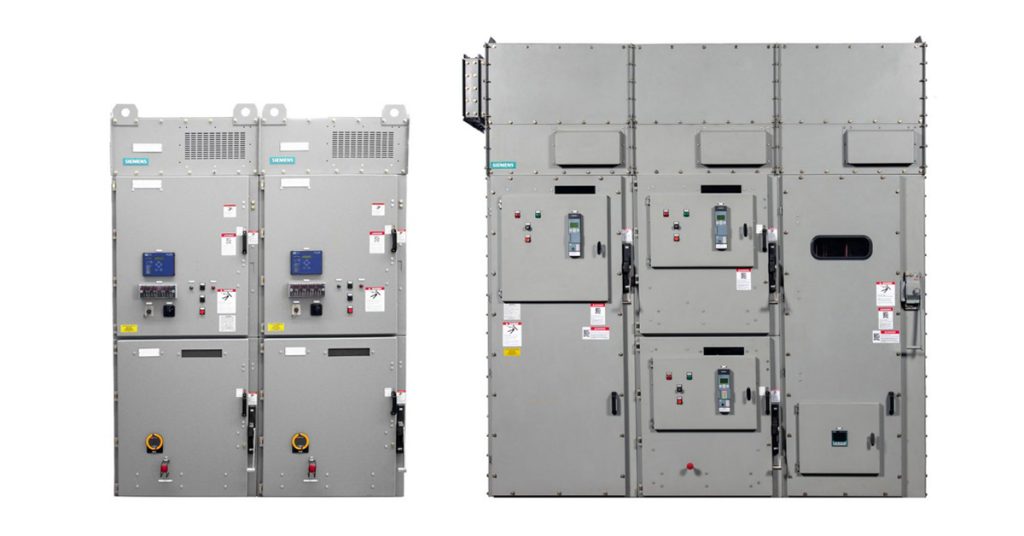
Siemens: SIMOVAC Non-Arc-Resistant and SIMOVAC-AR Arc-Resistant Motor Controllers

The Siemens SIMOVAC medium-voltage non-arc-resistant and SIMOVAC-AR arc-resistant controllers have a modular design incorporating up to two 12SVC400 (400 A) controllers, housed in a freestanding sheet steel enclosure. Each controller is UL 347 class E2, equipped with three current-limiting fuses, a non-load-break isolating switch, and a fixed-mounted vacuum contactor (plug-in type optional for 12SVC400). The enclosure is designed for front access, allowing the equipment to be located with the rear of the equipment close to a non-combustible wall.

Read More


Sponsored Content
Electrify Your Enterprise

Power is vital to production, and well-designed control cabinets are key. Allied Electronics & Automation offers a comprehensive collection of control cabinet solutions including PLCs, HMIs, contactors, miniature circuit breakers, terminal block connectors, DIN-rail power supplies, pushbutton switches, motor starters, overloads, power relays, industrial Ethernet switches and AC drives engineered to keep your operations running safely, reliably and efficiently.

Learn more HERE.


Products for Panel Builders