How Eplan Simplifies Controls Engineering for Machine Builders
February 13, 2026
By Todd Telles, CAE & Mechatronic Solutions Advisor, Eplan
Designing large, complex machines involves multiple disciplines, including electrical systems, fluid power circuits, and production planning. The challenge is coordinating these areas efficiently while maintaining accuracy and compliance. Eplan provides a full stack engineering environment that addresses these needs through structured, interconnected workflows and automation that goes well beyond schematics.
Next Level Electrical Engineering Tools
Electrical design for large machine tools involves managing thousands of connections, components, and compliance checks. Traditionally, this means hours of manually drafting electrical control systems and enduring error-prone updates. Eplan streamlines this process by introducing automation and intelligent tools that handle routine tasks. Key capabilities include:
- Access to verified component data through the Eplan Data Portal, which contains millions of manufacturer-approved parts for accurate integration.
- Automated wire numbering, cross-referencing, and error checks, reducing the risk of costly mistakes.
- Variant management tools that allow engineers to handle multiple machine configurations without starting from scratch.
These features enable teams to maintain design quality while significantly reducing time spent on repetitive tasks, freeing engineers to focus on innovation rather than administration.
Dig deeper into Eplan P8 functionalities
Fluid Power Design Integration
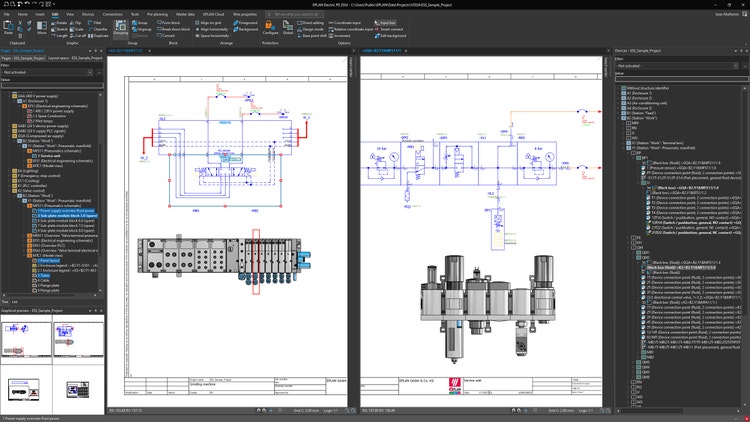
Fluid power systems, both hydraulic and pneumatic, are critical for machine tool functionality, yet they often require separate tools and manual cross-referencing with electrical schematics. This fragmented approach can lead to inconsistencies and errors. Eplan eliminates these silos by integrating fluid power design directly into the engineering environment. Engineers can enjoy the same level of functionality designing fluid power systems as Eplan’s electrical design processes, including:
- Creating standards-compliant schematics following ISO 1219 and IEC guidelines, ensuring global compatibility.
- Leveraging reusable macros for common hydraulic and pneumatic circuits, reducing repetitive work, and accelerating design cycles.
- Automatically generating documentation, including flow diagrams, parts lists, and assembly instructions, all derived from the schematic data.
By embedding fluid power design into the same platform as electrical engineering, Eplan reduces duplication, improves accuracy, and ensures that mechanical and electrical teams work from a unified dataset.
Linking Design to Production
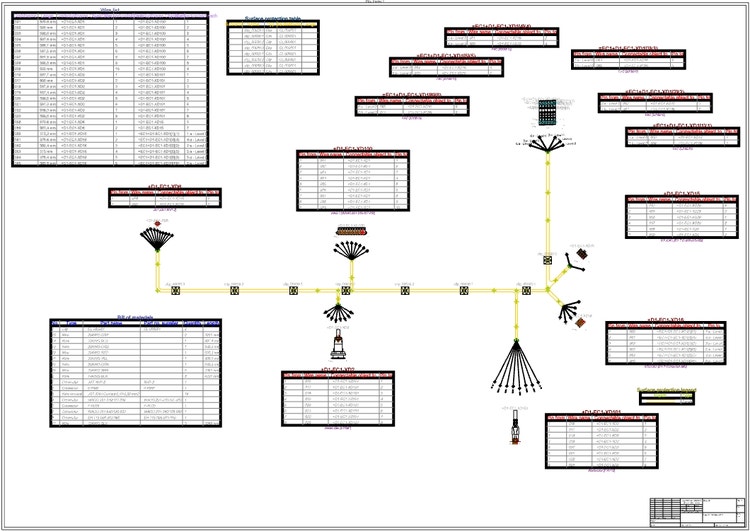
Ensuring that design intent translates accurately to the shop floor is one of the biggest challenges companies face. Traditional workflows often rely on static PDFs and manual interpretation, which can lead to delays and errors. Eplan bridges this gap by creating a digital twin of the control cabinet and linking it directly to production systems. This includes:
- 3D control cabinet layouts that can be exported for CNC machining and drilling, eliminating manual measurements.
- Step-by-step assembly instructions generated from the design, guiding technicians through wiring and installation.
- Integration with ERP and PLM systems, ensuring that engineering changes propagate through to production without duplication or miscommunication.
This level of connectivity reduces bottlenecks, improves transparency, and ensures that manufacturing teams have accurate, real-time data.
Learn more about Eplan Smart Production
Why Engineering Systems Integration Matters
Eplan isn’t just another engineering tool. It’s a gamechanger for companies that build complex machine tools. By unifying electrical, fluid power, and production workflows into one intelligent platform, Eplan helps teams move beyond manual processes and fragmented systems. The result? Faster design cycles, fewer errors, and a level of efficiency that traditional methods simply can’t match.
From automated electrical design and integrated fluid power schematics to digital twins that connect engineering directly to the shop floor, Eplan delivers precision and productivity at every stage. And that’s only the beginning. Its ecosystem offers even more capabilities to optimize collaboration, standardize processes, and unlock new levels of innovation.