Why Cable Management Is Now a Core Category in Modern Rack Deployments
May 4, 2026
As IT infrastructure continues to evolve, one thing has become increasingly clear: Cable management is no longer optional. It’s essential.
What was once treated as an afterthought or accessory is now a critical component of any successful rack deployment. That’s why Hammond Manufacturing has made cable management a dedicated product category, designed to support modern IT environments from the ground up.
The Shift: From Accessory to Infrastructure
In the past, cable management was often handled with a few basic organizers added after installation. But today’s environments are very different:
- Higher rack densities
- Increased cable volumes (especially fiber and high-speed data)
- Greater airflow demands
- More frequent maintenance and changes
Without proper cable management, even the best rack can become:
- Difficult to service
- Prone to overheating
- Hard to scale
Cable management is no longer just about appearance. It directly impacts performance, reliability, and uptime.
Why Cable Management Matters More Than Ever
Airflow and Cooling Efficiency
Disorganized cables block airflow, creating hot spots and reducing cooling efficiency. Proper cable routing helps maintain clear front-to-rear airflow paths, which is critical in high-density environments.
Faster Installation and Maintenance
Well-managed cables make it easier to:
- Add or remove equipment
- Troubleshoot issues
- Perform routine maintenance
This reduces downtime and improves overall operational efficiency.
Scalability and Future Growth
As networks grow, cable volumes increase. A structured cable management system ensures your infrastructure can scale without becoming unmanageable.
Professional, Organized Deployments
Clean cable routing is not just aesthetic. It reflects a well-designed system that is easier to maintain and operate over time.
Hammond’s Approach to Cable Management
Hammond has always supported cable management through its rack and accessory ecosystem. Now, by introducing a dedicated category, the focus is clear: Cable management is a foundational part of every rack deployment. This category is designed to provide:
- Structured cable routing solutions
- Compatibility across Hammond rack systems
- Flexible options for different environments and densities
Solutions Built for Real-World Deployments
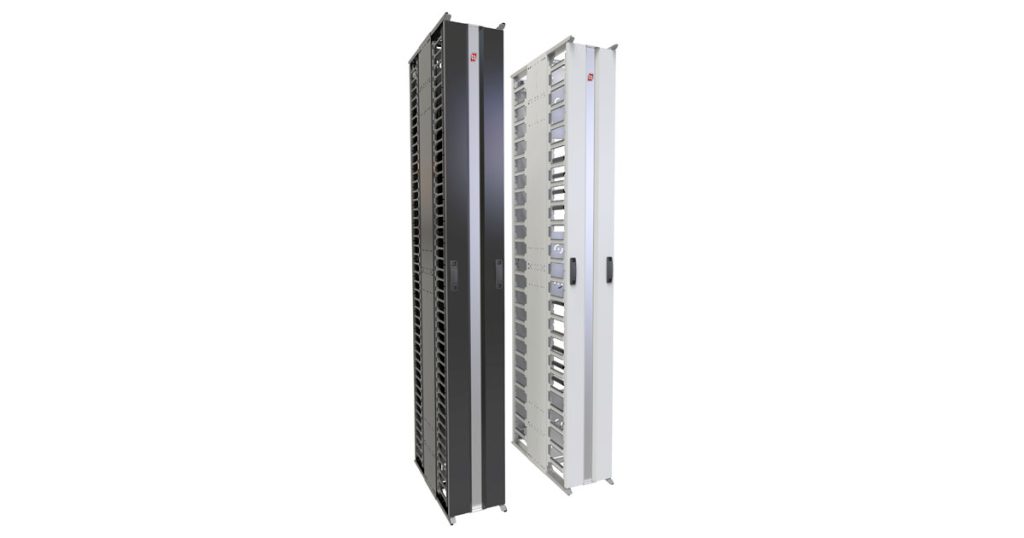
The Hammond cable management category includes solutions designed to address the most common challenges in modern IT environments:
Vertical Cable Management
- Organizes high volumes of cabling
- Maintains clear airflow paths
- Supports scalable growth
Rack-Mounted Cable Routing
- Keeps cables aligned and accessible
- Improves serviceability
- Reduces strain on connections
Integrated Compatibility
All cable management solutions are designed to work seamlessly with:
- Rack cabinets
- Open frame racks
- Wall-mount enclosures
This ensures a consistent, system-level approach rather than piecemeal solutions.
Designed to Support High-Density Environments
As rack density increases, cable management becomes even more critical. Hammond cable management solutions are built to:
- Handle large cable bundles
- Maintain organization at scale
- Support airflow in dense deployments
This makes them ideal for:
- Data centers
- Server rooms
- Edge and distributed IT environments
A Complete Rack Ecosystem
By making cable management a core category, Hammond reinforces a key principle: A rack is only as effective as the system around it. That system includes:
- The rack or cabinet
- Cooling and airflow design
- Power distribution
- Cable management
When all components are designed to work together, the result is a more efficient and reliable deployment.
Final Thoughts
Cable management is no longer something to figure out after installation. It needs to be planned from the beginning. By introducing a dedicated cable management category, Hammond makes it easier to:
- Design organized, scalable systems
- Improve airflow and performance
- Reduce maintenance complexity
The result is a cleaner, more efficient infrastructure that is built to support modern IT demands.