PBUS@C-level: An Interview with Michael Knight, Part 2
June 19, 2026
In the second part of our interview with Michael Knight, Corporate Senior Vice President of Strategy for TTI Inc., we look at robotics; how they are harnessing AI; and AI’s potential to improve the supply chain.
PBUS: We’ve been talking about use cases for AI and its impact on the supply chain. In addition to optimizing inventory management, analyzing buying habits and demand trends, where else do you see AI applications?
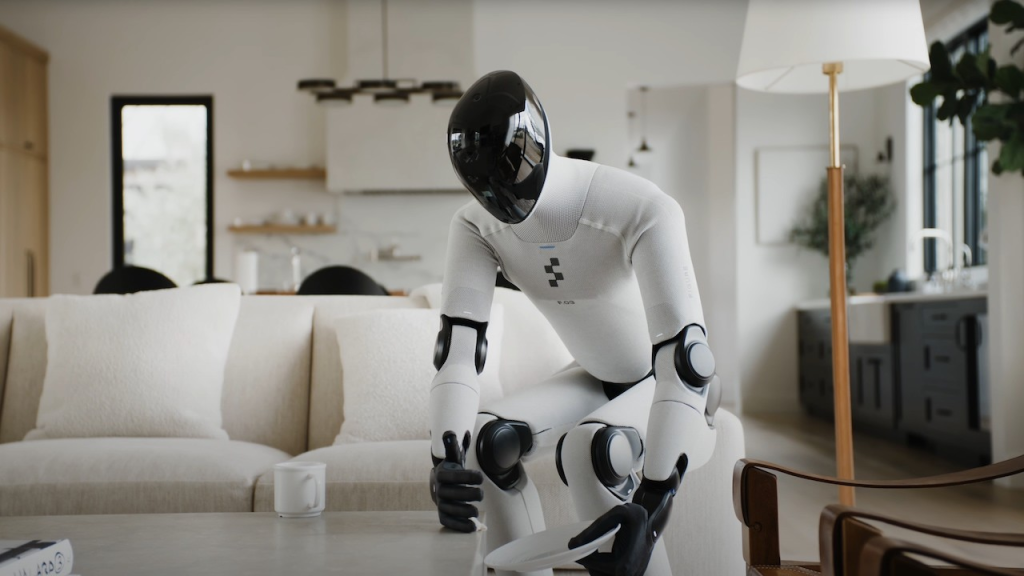
Knight: The piece that hasn’t shown up yet in the supply chain that’s related to this is the physical manifestation of AI in — the most obvious place is in humanoid robots — but in other places. It’s physically manifesting already in autonomous vehicles, but it’s going to physically manifest in all kinds of places where you are going to have AI embedded and AI on the edge. So, you’ll have neural networks. Figure 03, the latest humanoid robot out of Figure, is one hundred percent neural net.
And I mean, these are game changers. So, I think the build out of humanoid robots between now and the end of this decade is significant. We’re talking units in the tens of millions, hundreds of millions, ultimately in billions. And you think about all the electronics needed for that — we’re not just talking compute, we’re talking memory, storage, power, and motors — I mean loads of stuff. And that demand from humanoid robotics is not in anybody’s planning cycle at this point. I am not aware of any of the component manufacturers that are thinking about ‘what capacity am I going to need for that?’
PBUS: Sounds like AI could be of some help here.
Knight: Part of the demand is created by human nature. Generally, we don’t want to do dirty, dangerous, unsexy stuff. So, when you look at where we have tightness in the labor market today it’s around a lot of that. More people are leaving [the U.S.] than coming in. And so there is a lot of work that needs to be done, and who’s going to do it?
[Demand] is also driven by the economics of running a business. Having shareholders. Humanoid robots potentially unlock a next level of productivity, especially in manufacturing businesses.
PBUS: I’m curious as to why robots are humanoid. Robots in manufacturing, for example, look nothing like people.
Knight: The big application for humanoid robots is going to be in healthcare and elderly care. This is what Japan leaned very early on. They were an early innovator in humanoid robots because they had an aging population, and birth rates were way down. They were already at point where [they had to] import [health care providers] from the Philippines. This is going to be a big application for humanoid robots. [Elon Musk] has humanoid robots building cybertrucks. You are going to see a lot of these in manufacturing environments.
PBUS: Robots are certainly efficient.
Knight: Let’s say a robot needs to be recharged every four hours. Another robot comes in and picks up exactly where that first one left off, seamlessly, while the first one goes stands on a charging pad and recharges for an hour. So, in a twenty-four-hour shift, you have robots that are just working continuously. The ‘shared consciousness’ can be downloaded from one to the other and you don’t have to bring the other up to speed. [Robots] will become ubiquitous the way drones have become ubiquitous. This stuff just takes time.
PBUS: What do you think is holding that back?
Knight: There is a tipping point, and the tipping point is usually a combination of real-life practical applications with good economics behind them, as well as the right technologies coming together. [Robots] have to be cheap enough, light enough and consume less energy. Then suddenly, something that conceptually has been around for a while gets traction.
PBUS: Getting back to the supply chain, how does a business plan for something like that?
Knight: [TTI] has good visibility across our business as to what these trends are. We have [catalog distributor] Mouser which is at the front end of supplying the latest and greatest product technologies.
So, we can see what the demand is, and suppliers are of course very interested in that as well because they must make decisions such as, do we bring lead times down by investing in more capacity?’ The other factor is the [manufacturing] equipment that uses common parts. They are also seeing their backlogs growing.
PBUS: We’ve recently been through such a cycle, and many component makers have invested billions in added capacity. It seems to me they’d be reluctant to add more so soon.
Knight: It comes down to whether you believe this is a cycle or a structural change. That’s the burning question for memory at this moment. Are we in a memory supercycle or is this structural change? It’s still early and it’s hard to say with one hundred percent conviction.
In the last couple of months, we’re talking about memory being the new golden screw. When people can’t get their memory, it’s going to affect their operating results. It’s going to affect their production schedules. It’s going to affect the supply chain, because if you can’t get your memory, do you need all the other stuff until you get your memory? Applications like notebook computers and cell phones are going to get starved for memory.
I am inclined to think that this is structural. This is going to become a new norm. Can the supply chain giddy up and support it? If the supply chain hesitates, underinvests, the supply chain is going to end up kneecapping this. But I don’t think that’s going to happen. Because if it’s real, it will find a way.
PBUS: What could contribute to a better-managed supply chain?
We’ve been talking for a long time about this frictionless digital supply chain where information is moving up and down the supply chain, no barriers. It’s perfect information. You know how the supply chain has always worked — you get this whipping tail. The further away from you get from true demand the more fluctuation you see. If you could just take that out and take the whips out of it and turn it into a straight line and perfectly balance the very tip of the supply chain with the core of true demand [that would vastly improve the supply chain]. Then, that’s perfect because we’re all making decisions on the same perfect information, right? So, there’s no doubt in my mind that AI is going to be a big enabler.
There are some things that can trip us up but let me put it this way: the picture I just painted is not possible without AI. With the AI as I understand it today and my view of where it’s going, it’s possible, absolutely solvable now. We’re going to figure it out, and this is a more exciting time to be in electronic components than any other time in my history in electronic components. And tomorrow will be even more exciting.