PBUS@C-level: An Interview with Phil Gallagher, CEO, Avnet Inc.

ROI remains evasive as data centers thrive: executives agree that AI is everywhere, but unlocking its value is still uncertain. Barbara Jorgensen, Contributing Editor at Panel Builder US, sat down with Phil Gallagher, CEO, Avnet Inc. to discuss AI’s evolution, expanding data center demands, and the elusiveness of ROI in this space.
By 2030, data centers will require an investment of $6.7 trillion worldwide to keep pace with the demand for compute power – “a staggering number by any measure” –said McKinsey & Co., author of the Data Center Demands market report.
Much of that capacity will be dedicated to unlocking the value of AI. Companies across the compute power value chain “must strike a balance between deploying capital quickly and doing so prudently,” McKinsey added.
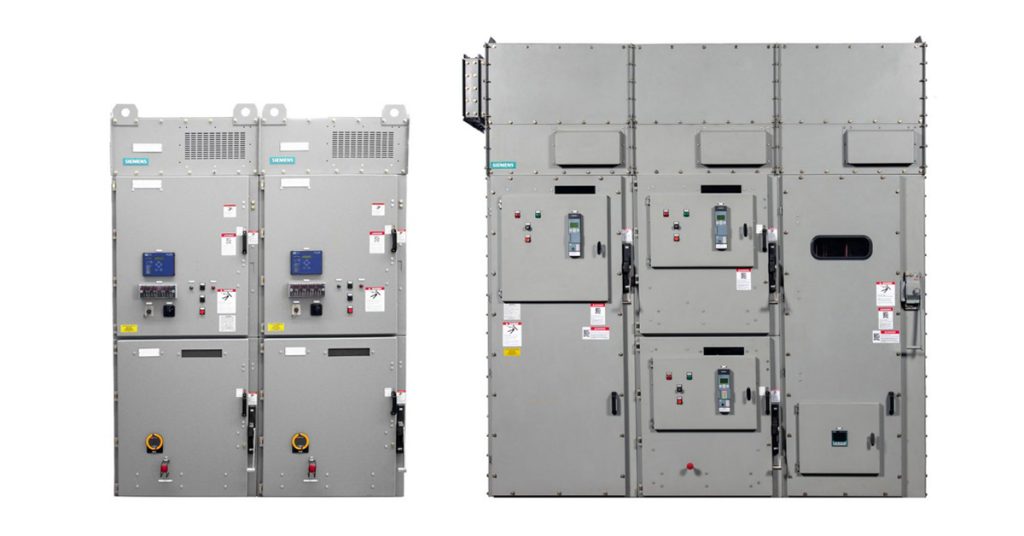
At the heart of every data center is a complex electrical infrastructure, notes MarketScale. Industrial control panels manage the distribution of power from utility feeds, backup generators, and uninterruptible power supplies. These panels ensure that power is delivered consistently and safely to critical systems, with built-in protections against overloads, surges, and failures.
It’s clear that opportunities abound for manufacturers and resellers of electronics and related equipment. Yet industry executives and consultancies alike are uncertain how enterprises will turn AI into real business impact. “If companies fail to create meaningful value from AI, demand for compute power could fall short of expectations,” McKinsey warns.
Global $22 billion electronics distributor Avnet Inc. has seen demand for AI-adjacent products and services skyrocket in the past few quarters. PanelBuilderUS.com contributing editor Barbara Jorgensen recently discussed the hyperscaler and data center markets with Avnet CEO Phil Gallagher.
Q: What business sectors within Avnet’s customer base see AI-related sales traction?
Gallagher: As you know, Avnet’s largest vertical is industrial. As I was meeting with our salesforce, I was pleasantly surprised by the amount of activity we have going on in this data center/hyperscaler space, either selling components directly or through customers such as EMS providers.
The other side of that is selling the supply chain services we provide – we’re doing proposals for some very large hyperscalers.
So, data centers are taking up a ton of power, and products related to power management are in high demand; also, wiring, cabling, power, and sensors. I wouldn’t be surprised if companies in the panel building industry are seeing the same trend in power management. When you add it up, it’s billions of dollars [Avnet] could see passing through our end customers. So, demand is very real.
Q: You mentioned earlier there are concerns about the sustainability of the activity you are seeing regarding AI and its infrastructure.
Gallagher: What’s hard is calculating the ROI on any of this stuff. AI’s going to drive efficiency and productivity and help us with e-mails, letter writing, customer service, back office and things like that. But it hasn’t happened yet. I do believe the potential for AI is for sure real, there’s no doubt.
But people in the enterprise particularly are still trying to figure out the appropriate use cases in the whole enterprise side. Consumer [use cases] are relatively simple, but on our side it’s not as simple to come up with that hard ROI and finance guys are already asking the questions.
And regarding adaptation of AI tools, it’s not likely executives are aiming to lay off 20 percent of their workforce. That’s not why companies are using AI. But how can we drive efficiency and productivity through attrition and things along those lines? Where we are adding tools and making other investments, we have to get a return.
Q: Based on Avnet’s product and services portfolio, where else do you see opportunities in the data center/hyperscaler world?
Gallagher: Well, we have components which are sold to end-users or through EMS companies such as Foxconn. We also have our embedded systems business, which we retained after the Technology Solutions business was sold to Tech Data. That’s where we do what I’d call the rack boards, racks, wire, cable and software testing. And it’s going to be important to embed intelligence at the edge via AI chips.
And we’ve all been talking about the edge for how long, right? And it’s there to some degree, but it’s going to further smart elevators, smart escalators, smart buildings, smart, I mean, you name it. AI is part of the whole trend toward digitalization.
As we move more toward the edge as an industry, the chip will secure its place at the edge. And that creates an opportunity for Avnet and its suppliers.
Q: Back to components for a minute. Is the channel seeing shortages in any products because of AI?
Gallagher: Oh yeah. The amount of memory that GPU makers are demanding is insane. The AI infrastructure is consuming a disproportionate share of global capacity.
The tightest constraints are in dynamic random-access memory (DRAM), particularly server-grade DRAM and high-bandwidth memory (HBM). As suppliers prioritize AI, availability tightens across standard double data rate (DDR) and beyond. Quote windows are shrinking, pricing is moving closer to shipment, and predictability is eroding. Managing those dynamics is distribution’s sweet spot.
So, to conclude, the data center opportunity is a massive opportunity for us, and we are trying to continue to understand the dynamics because things are moving so fast.
More information about data center solutions from Avnet