EIC Solutions Develops 5500 BTU Thermoelectric Air Conditioning
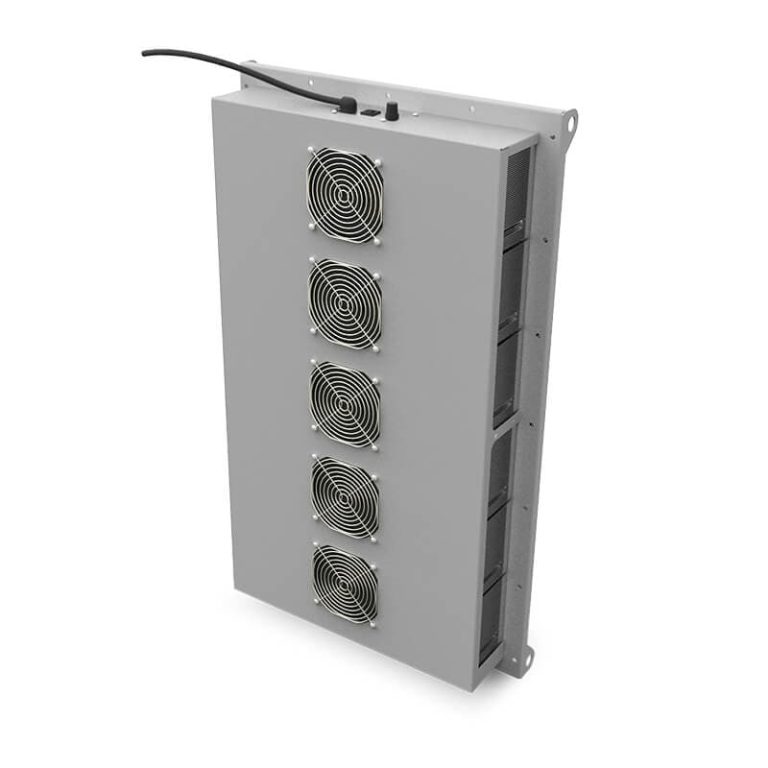
EIC’s 5500 BTU solid state thermoelectric air conditioning units are designed to cool your electronic and electrical controls in variety of environments.
nVent Electric plc, a global provider of electrical connection and protection solutions, and Power Resources International, Inc. recently announced a strategic alliance to provide rail and switch heating solutions to the North American transit industry. The alliance will provide solutions based on nVent RAYCHEM technology. By joining the major heating solutions and customer support of nVent with PRI’s excellence in engineering, controlling and system integration capabilities, customers will be able to fully integrate their heating systems for winter operations.
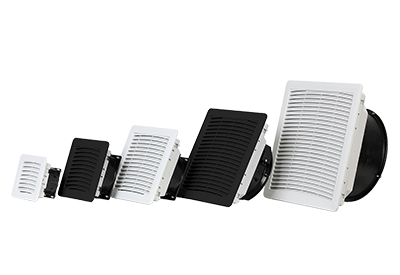
Arieltech’s FTEC series Fan Filter and Exhaust Filter are designed to supply forced convection filtered air for enclosures and electrical panels. By using the unique filtering and cooling features, FTEC will cool down the inside of enclosures to a desired temperature to protect the electrical and electronic parts against heat.
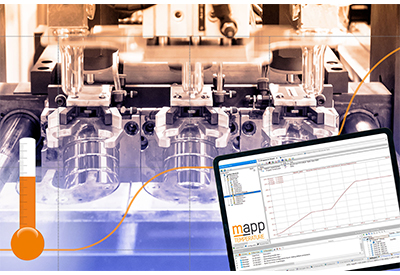
B&R’s mapp Temperature software package provides a new pre-programmed way to get manufacturing systems up to temperature. At the push of a button, the Soft-Start function heats up machine components gently to minimize heating element fatigue – without any of the tedious programming that used to be involved. Homogeneous heating reduces mechanical stresses and allows for controlled evaporation of liquid residues in the machine.
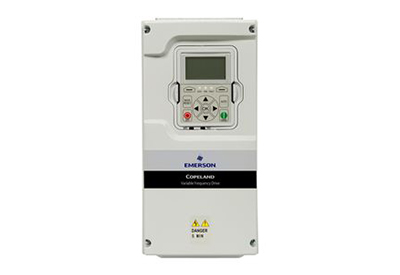
Emerson recently announced the introduction of its Copeland commercial HVACR variable frequency drives (VFDs). They are specifically engineered to save energy in a variety of demanding commercial and industrial refrigeration applications. Adding a VFD to control the speed of a compressor, evaporator or condenser fan in applications such as a refrigeration rack or chiller can enhance overall system reliability and provide significant energy reductions, delivering quick return on investment (ROI) for users in this space.
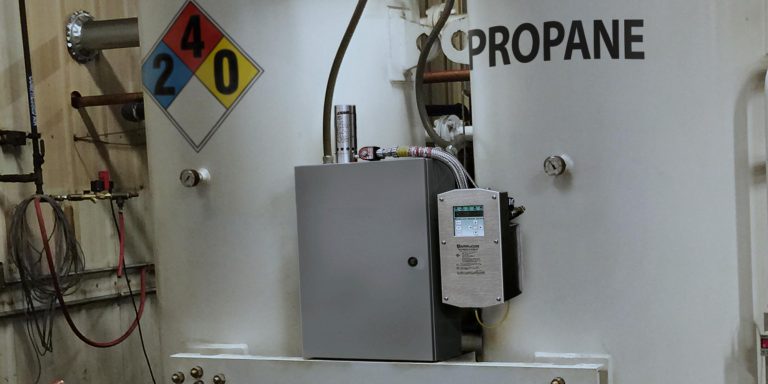
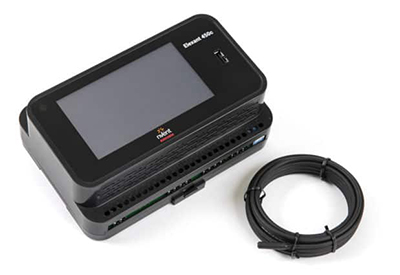
nVent Electric plc , a global provider of electrical connection and protection solutions, recently announced the addition of a Modbus communication protocol to its advanced, energy-efficient commercial heat-tracing controller, the nVent RAYCHEM Elexant 450c. Launched in late 2019, the Elexant 450c is an indoor-housed heat-tracing controller designed to provide specifiers, installers and building owners with the latest in smart, energy-saving anti-freeze protection.
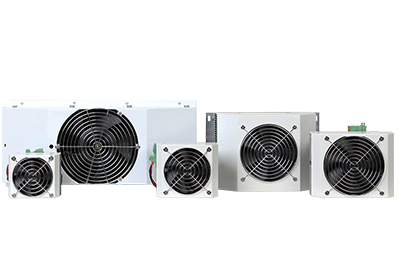
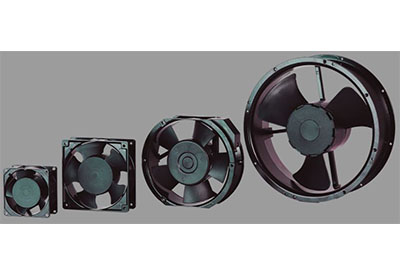
Introducing the new FANTEC series Axial Fans from Arieltech, which are designed to supply forced convection air to enclosures and electrical panels. By using the unique cooling features, FANTEC s will cool down the inside of enclosures to a desired temperature to protect the electrical and electronic parts against heat.
It’s time to take a better approach to data center cooling. Unbalanced or stranded resources lead to unusable power, space, cooling and connectivity making it difficult to reach 100% capacity utilization and challenging to meet business demands. The result? High energy costs, increased capital, increased operational expenditures, and increased risk of business disruption
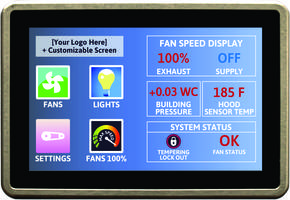
EcoBOSS Energy Management Control Systems deliver up to 80% reduction in kW consumption for typical industrial ventilation systems. Boss Products engineers have spent years of research & testing to verify that the key to significant energy savings is to regulate fan performance capacity to deliver the suction volume based on spindle run time. Typical industrial ventilation systems are designed to operate at full capacity.
nVent Electric plc, a global provider in electrical connection and protection solutions, recently launched a new High Thermal Integrated Conduction Cooled Assembly for the aerospace and defense industries. Designed for rugged conduction cooled assemblies (CCAs) in VPX systems, the High Thermal Integrated CCA design innovatively removes a thermal interface resulting in up to 40 percent improved module thermal resistance, depending on the configuration.
nVent Electric plc recently introduced the nVent SCHROFF Varistar LHX+, a standardized modular cooling system with a cooling performance of up to 10 kW. The system is built into the nVent SCHROFF cabinet and uses a specialized air-water heat exchanger to cool the electronics to a precise temperature to optimize performance. “We have developed a market-ready cooling unit that can be used in any application that requires the highest degree of measurement precision”
Introducing the 125-1300W fan heater with built-in thermostat (-18 C to +38 C) (0 F to +100 F), designed to prevent condensation or maintain minimum temperature in enclosures. This fan heater features a Fan Auto/On switch with pilot light for Heat On indication, high temperature safety protection, and an aluminum alloy outer casing, and has a connection via terminal block.
Data Centre and Plant Managers working in small and mid-sized businesses often find themselves searching their buildings for unused space to house the company’s IT and other enclosures. Mailrooms, empty offices, janitors’ closets…all have been repurposed into data closets holding one to a few racks. This approach may be the right choice in terms of square footage needed, but when it comes to proper climate conditions for sensitive IT equipment, it could not be more wrong.
Struggling to have proper heat distribution within your enclosure? Don’t let temperature and condensation derail your mission-critical applications. STEGO is here to help with a wide array of FAN HEATERS that are available in both AC and DC variants. These high-performance heaters are designed to distribute heating power evenly and consistently throughout the whole enclosure. This series of STEGOs heaters are ideal for enclosures where space is at a premium.
The compact compressor can be adjusted to the required cooling capacity with variable speed via a controller and thus only consumes the amount of electricity that is actually required to cool the current power losses. By continuously adapting the cooling capacity, a very constant enclosure temperature is achieved which means that the electronic components and the cooling unit are significantly less stressed. In addition, the formation of condensation inside the enclosure is minimised.