Electrical Panel Box vs Junction Box: What’s the Difference?
August 11, 2026
By Josiah Haas, Bud Industries, President
The controls for machines and automation need somewhere to live. An electrical panel box is that home, the enclosure where the controls that run a line, a pump, or a process are laid out, wired, and protected. An electrical junction box plays a humbler role, serving as the intersection where wires meet. The two can look similar on a wall, but they do very different jobs. At Bud Industries, we help design engineers and panel builders match the right enclosure to the right task. Here is a straightforward explanation of the difference.
What is an electrical panel box?
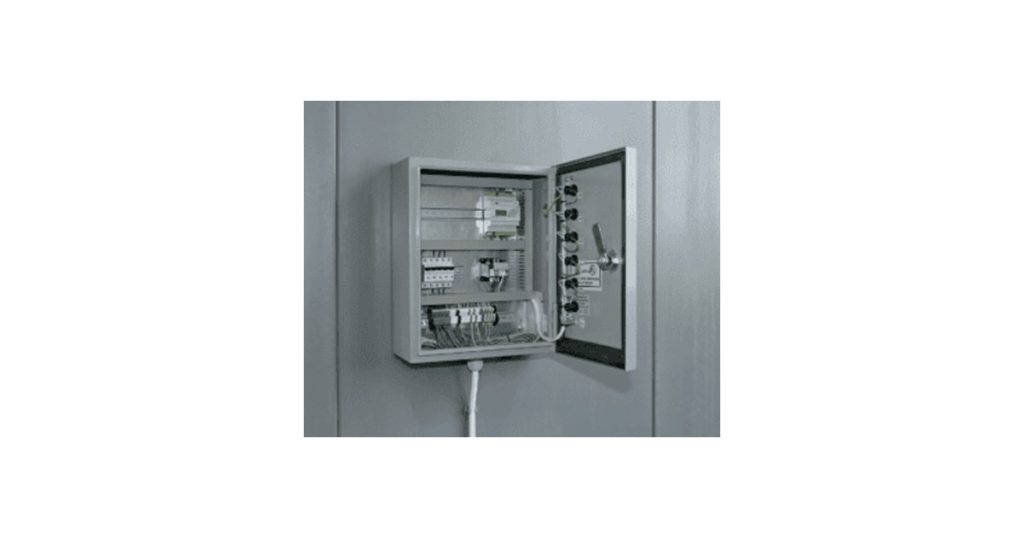
An electrical panel box is the enclosure that houses and organizes a power distribution or control assembly. In building wiring, the term usually refers to the cabinet around a panelboard, the buses and overcurrent devices that distribute incoming power into circuits. In industrial automation, a panel box is the enclosure that holds a control build: PLCs, terminal blocks, relays, drives, and power supplies mounted on an internal panel.
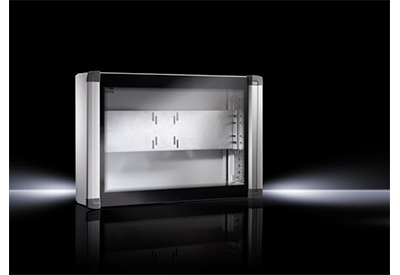
The internal mounting panel is the workbench for your build. Fasten components to it and route wiring around it. It’s easier to mount the components on the panel before installing the panel inside the enclosure. Bud’s SN Series steel enclosure is a good example of an electrical panel box. It ships with an internal metal panel that makes it ideal for use as an industrial controls cabinet.
DIN rails are commonly used inside of panel boxes to organize and simplify component installation. Components snap onto the rail without the need for mounting screws. Circuit breakers, terminal blocks, relays, and power supplies click onto the rail and slide along it, speeding both the build and any later changes. DIN rail power supplies feed power to all of the components mounted on the rail. Most of Bud’s large NEMA and IP rated boxes include mounting bosses in the base that are suitable for adding DIN rail, and Bud offers a full line of DIN rail enclosures for compact snap-in assemblies, including the IP66-rated DMX Series for washdown environments.
Of course, a panel box enclosure must seal out hazardous environments. On a clean factory floor, a NEMA 12 enclosure protects against dust and dripping oil. Factory washdown and outdoor locations call for a more tightly sealed NEMA rated enclosure such NEMA 4X. Our NEMA rating guide walks through how the different NEMA ratings compare.
How a panel box differs from a junction box
An electrical junction box has a narrower purpose: it protects and encloses wire connections. Whenever conductors are spliced or tapped, code requires the connection to sit inside an approved, accessible box.
The distinction comes down to what lives inside the enclosure. A panel box distributes power or houses a control assembly on a mounting panel, whereas an electrical junction box keeps splices protected and accessible. Bud’s steel JB Series steel junction boxes and JBH Series hinged-cover boxes are built for that, with knockouts, grounding provisions, and easy access.
Knockouts facilitate connection to electrical conduit. However, we see plenty of plastic and fiberglass enclosures (which do not have knockouts) used as junction boxes. At the factory, we can quickly and expertly modify an enclosure with holes for connections.
Can an electrical panel be used as a junction box?
For installations in the United States under the National Electrical Code, the short answer is yes, within limits. NEC 312.8 permits splices and taps inside a cabinet or cutout box that also holds switches or overcurrent devices, as long as conductors, splices, and taps fill no more than 75 percent of the wiring space at any cross-section. The enclosure must also keep a proper cover and stay accessible.
In the field, electricians often reuse a retired panel enclosure as a junction point when relocating a panel a short distance, closing it with a listed cover and marking it clearly. Always confirm against your local code and authority having jurisdiction, because requirements differ by region.
What are the different types of electrical boxes?
“Electrical box” is a broad category, and the right one depends on what it needs to hold. The common types include:
• Device or outlet boxes, which mount switches, receptacles, and similar devices.
• Junction boxes, which enclose and protect wire splices and taps.
• Terminal boxes, which organize incoming and outgoing wiring on terminal blocks for cleaner distribution and quicker troubleshooting. Bud’s PTT Series terminal junction box is built for this.
• Pull boxes, which give conductors room to be pulled through long or complex conduit runs.
• Control or panel enclosures, which house automation assemblies on an internal mounting panel, such as the steel NEMA and IP rated enclosures used as controls cabinets.
Choosing the right box for your build
Start with the job, not the box. If you are building a control or automation assembly, you want a panel box: an enclosure with an internal mounting panel and a rating suited to the space, such as the SN Series enclosure for indoor controls. If you are only protecting a splice or a tap, a junction box such as the JB Series does the work for less cost. Inside the panel box, a DIN rail and purpose-built terminal box keeps your terminal blocks organized.

https://www.budind.com/blog/2026/08/electrical-enclosures-vs-junction-boxes-bud-industries/