PBUS@C-level: An Interview with Dave Doherty, CEO at DigiKey

DigiKey is a catalog, or high-mix low-volume electronics distributor, that early on adopted e-commerce and now digitalization to quickly serve a very broad customer base. But suppliers, distributors and customers have all developed systems that best serve their needs; not necessarily their partners’. AI is poised to solve some forecasting, inventory and optimization challenges. Yet Dave Doherty, CEO at DigiKey, thinks the industry can do better. PBUS contributing editor Barb Jorgensen and Doherty discussed ongoing challenges in the supply chain and the current demand cycle fueled, in part, by AI.
Jorgensen: Dave, we shared a few e-mails prior to this interview, and some of the observations you made, post-EDS, focused on the distribution industry’s progress in digitalization of the supply chain. Has that changed since AI has become a factor?
Doherty: We aren’t where we thought we would be, or where customers think we should be.
If I look in the mirror — and we’re always very critical internally of ourselves –we still feel like we’ve been transitioning from a catalog company doing business on the web. That’s very different than a digital company. And I think, by the way, that we’re still on the leading edge of that. But we can’t keep throwing people at the problem because there is waste in that.
Jorgensen: Waste has always been a problem in the supply chain. How do you identify it and try to eliminate it?
Doherty: Customers are saying to us ‘hey, I can’t control surcharges, but I don’t want to pay for waste.’ And maybe I’ll start with suppliers, because I think even more so with our suppliers, we’re still kind of backwards as an industry.
If you were to sit on our receiving dock and see how many pallets go to exception — because they can’t be scanned in, or because they send us five pallets and when one of them has all the labels and the invoices but it doesn’t match all the boxes — it sits there for two weeks while we sort it out. Instead of going seamlessly from the dock to stock, we have to go back out to customers and suppliers and that’s all waste.
Shipping the inventory to us does nothing unless it’s on our shelf in a position to be sold to customers. For many of our suppliers, we have more inventory with them because of our [low volume, high mix] model. And so, we can’t continue to do ASAP orders because [a supplier’s] system can’t handle scheduling, or our system can’t handle when [suppliers] break a 10,000-piece order into three shipments of 3,300.
So, we’re putting an even bigger investment in that digital enablement.
Jorgensen: And how about on the customer side?
Doherty: The customers at the leading edge are telling us the same thing, which is: ‘I love the service.’ [In some of my past positions, distributors] had a hard time recognizing that customers really don’t want you to come in and visit them. Customers don’t like to call us and hear our pleasant voice. They want to not have a reason to call us.
And then if they do need to call us, let’s make that an exception, but they’d rather have real-time information. If I can tell whether my pizza is in the oven, the order’s been taken or it’s on its way to me, why can’t I tell where my order is at DigiKey? It’s happening because the consumer world has driven it so effectively, customers are expected in other aspects of their life.
[We are concerned about] going from having leading edge technology to having trailing edge logistics and services. And that might be okay comparing us to each other, but not comparing us to our customer and the customer experience our customers want.
Jorgensen: All of this requires coordination among suppliers and customers, and during Covid it seemed like everyone was pulling in the same direction. Are your customers seeing the need to continue to improve their digital acumen?
Doherty: Now [digital] getting a little bit more mainstream where [customers are] saying, ‘I can’t afford to have someone call you. I want my system to know when there’s a shortage. What’s the price and availability of your product? Can my system order it from yours tonight so that I get it tomorrow so I get my revenue shipment?’ You know, this is all music to our ears.
Covid made even more mainstream folks comfortable with e-commerce and dealing with people remotely because it had to, that trend had already happened, but it’s accelerating. So, what does that entail? There was a period, this was even pre-Covid, where there were third parties that were, you know, willing and able to take a customer’s bill of material and do tracking and logistics.
But you really don’t need a third party involved. It doesn’t make sense. It doesn’t make things any easier.

Jorgensen: My impression is that large enterprises have embraced digitalization. Is it still a make-or-buy dilemma for the broader the customer base?
Doherty: Some of those customers are still very effective. You know, one of the most constrained resources of any company is its IT department.
And so, some folks say, ‘I’m just so small, I don’t have it.’ In distribution, we go from EDI to an API. It’s a real time connection between two systems, but you still have to have the right standards in place. It has to be mapped.
I’m told that a lot of our API and even EDI [users] think an 855 or an 850 is a standard connection. There’s still a lot of tweaking and verification that has to be done between both parties. So we still need to make those more — I’ll say extensible — so that when a customer sets up an 850, they can do it with any of their partners. It’s not custom tweak for each partner that they have.
[So], we’ve invested in the [technology] stack, becoming a digital-data-centric DigiKey. All of the information is normalized, is in the right place, but we just need it to be able to scale faster so that each connection doesn’t take that personal touch.
Jorgensen: Order confirmation, tracking and notifications are done at Amazon – I’m a big fan – so it’s clear customer ‘want-to-haves’ are possible. I guess I’m just not figuring out why it’s not as easy for every company to head in that direction.
Doherty: You know, we’re more like herding cats in our industry and using associations like ECIA and others to try to drive standards. But, you know, I was told that 98 percent of the time we’re using the customer’s template. We’re not using ours.
A template’s got to be a template that there’s a standard set of information that’s transmitted. But there might be a super set of additional factors.
We’ve had a scan tunnel in place since we built our new warehouse and we have yet to put a package through it because that’s supposed to have a package run through, read the barcode, automatically ingest all that information and just send it up to receiving. We have not yet been able to get the software connection between our suppliers through our system, etc. So that’s an expensive piece of hardware that sits idle even to date.
Our industry doesn’t have an Amazon -like player that dictates, and then others will just follow.
Jorgensen: Let’s talk about the elephant in the room – AI and data centers. What do you think is DigiKey’s sweet spot in this market?
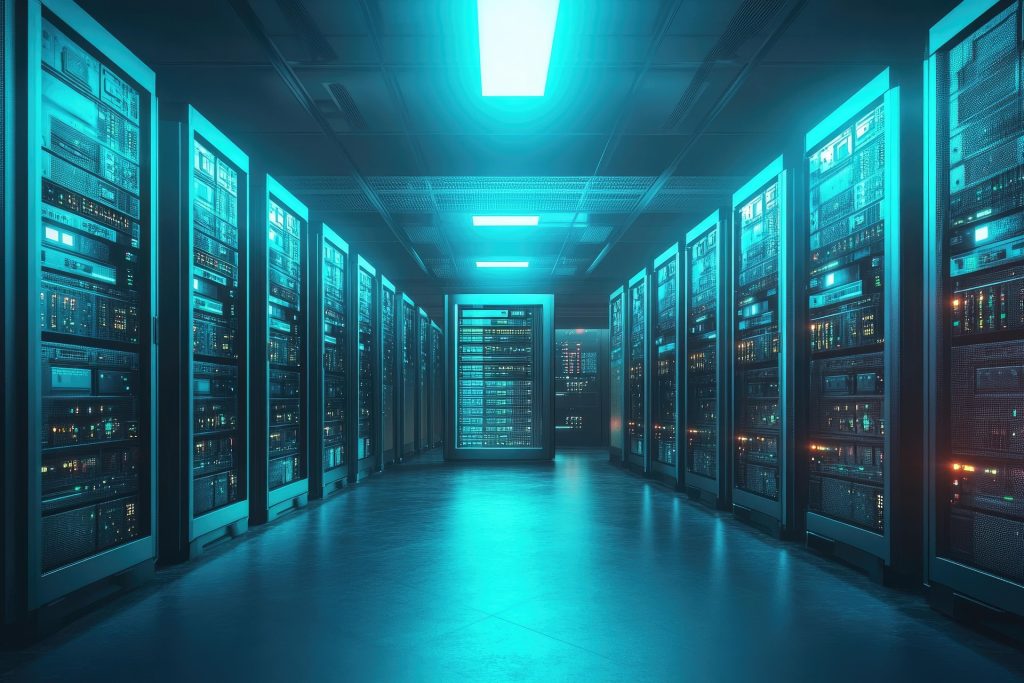
Doherty: I was naive in the sense of how far the tentacles go. You read articles on how much power these data centers are sucking up. Well, what does that drive? It drives a requirement for more efficiency and power consumption and everything else that we consume as, as individuals, whether it’s industrial or consumer.
And so we have that spillover of people trying to redesign their products to take less power because the data centers are driving up the cost of electricity. That’s an extension of AI. So it’s those kinds of tentacles that I think are helping to drive this in a much broader way than I ever would have imagined. You know, clearly it’s sucking up the memory. The one fear is, it’s having this effect across every segment.
But it has driven this ripple effect, whether it’s technologies that are interfacing with AI on the edge, it has been a rising tide that’s lifting all boats as far as consumption. [When] you talk about power and power management, it’s not a product that you typically see all of a sudden demand explode for, and you can’t ship fast enough.
Jorgensen: Yet we’ve seen in past cycles customers over-ordering or ordering so far out that by the time product ships they don’t need it anymore. Ironically, AI is intended to help data analytics so such anomalies can be flagged.
Doherty: We see our average order size going up when there’s no apparent need. It just can’t feel like with all the geopolitical concerns and all the things happening in the world that demand can be up anywhere near where our volumes are up these days.
And yet we kind of blindly accept it until we wake up one day and find out that now we’re on the backside of that over exuberance in inventory build. So obviously everybody’s in taking all of this data and you see an abnormality in an order pattern.
Now, obviously you’re not inclined to say, ‘whoa, wait a minute, you know, stop.’ We got hyper excited when people said, ‘I want to put a big backlog order on you’ knowing darn well that we’re not normally a part of their supply chain and they’re buying insurance.’ And by doing that, we were starving our traditional long tail. So we, we were doing a couple of things.
We’re not quoting on those big bids for product because we know that’s not our space. And as soon as we sense or our suppliers tell us there’s little lengthening of lead time or anything that shows signs of constriction of the supply chain, we start putting max order quantity on products. We would much rather ship many small shipments of products than one large shipment.
Now from an MBA, that’s totally counterintuitive. You make more money by fewer shipments of large volume, but our commitment to our supplier and to our customers is, yeah, we’re enjoying the revenue of today, but we’re seeding the revenue for tomorrow.
And I can tell you how that’s manifesting itself. During Covid, we had similar explosion in terms of our revenue, but our customer count started flattening out in certain quarters. It would actually dip. Right now, while we’re up 50 percent in revenue, our customer count is up 11 percent.
Jorgensen: And so how do you manage that?
Doherty: One, we try to manage on the front end with our volumes. We try to remind these guys that, you know, when some of the big traditional carriers pulled away from Amazon and they were hurting and laying people off, we were still driving numbers with them.
So, some built very custom logistics supply chains with us, flying directly out of Thief River Falls, etc. So we have contracts with them. And they’re great partners, recognizing the long term with DigiKey.
That said, you know, we’re still not 100 percent immune from fuel surcharges or tariff costs. At the end of the day, if we’ve got a specific cost that’s been passed on to us, we really don’t have that buffer in the margin to just eat it. So that does get reflected in some of the shipping rates going back out.
Jorgensen: The classic problem for distribution has been, in terms of demand-creation, the identification of the design win, then tracing that win through end-customer production. The design cycle seems to be a problem that can be helped with AI.
Doherty: Well, you know historically trying to forecast incoming demand at the front end has been very difficult because a newly introduced device hasn’t been proven. So everybody’s forecast system looks in the rear-view mirror and says,’ what did I sell yesterday? How much? At what rate?’ And that’ll dictate what I order going forward. And, you know, the problem with that is not every new product introduction is the same. Some take off, some lag for a while.
And so, the ones that take off, it would usually take two or three stock-out cycles [before you have a sense for demand]. Let’s say you buy a real or a minimum order quantity. You burn through it in three weeks.
You’re out of stock for a while. And you say, oh, I need to buy slightly more. The system was out of stock for a while, so it only saw what it sold.
So, it says, ‘I’ll buy two order quantities.’ And you sell right through them, you stock out again, and it’s not until a couple of cycles that you actually get the right amount on the shelf to satisfy demand. Using AI tools — data analytics, big data all lumped together — is really using data more smartly, to me, at the end of the day.
Our suppliers are working with us. So we’re looking at not only what we’ve sold, you know, what parts are getting what activity on our website, what parts are getting what activity on our supplier websites, what’s coming in for quotes to us. And so, it takes all of this and it starts doing a part scoring that comes up now with the probability of what’s the adoption rate of that part going to be.
And we start buying based on that, not having good visibility in the rearview mirror. So that’s one way we try to more quickly get the right level of inventory on the shelf versus doing this, you know, this sawtooth in-stock, out-of-stock, in-stock, out-of-stock. You know, we’ve never really been able to rely on our supplier data.
And then they start to look more at our data now, too. So we’re now starting to share data back and forth on what we’re both seeing. We’re keeping confidentiality of us not sharing [data] to other suppliers or them not sharing other distributor insights and trying to make more intelligence.
We’re getting so many signals that we’ve never really processed. You go back to Amazon. You know, how good are they at kind of foreseeing what you want? You start to search for something that already knows what you’re looking for.
We’re nowhere near that capability. But we’re certainly — you know, we’re out of kindergarten, maybe in the second grade, as far as trying to get smarter with that sharing and making usefulness of this data and converting it to information.
And instead, we’re maturing, respecting privacy laws to figure out how we share information to serve customers better, not to pry into them or cause them harm, but to have those insights so that we can give them a better experience.
But there’s enough stuff that’s going out there that’s hard to model. [This demand cycle] is one that’s kind of keeping people awake at night. The memory guys are saying they’re sold out for three years. At what point does that become the golden screw that they can’t ship the rest of their stuff? So, you know, again, paranoia is healthy to a certain extent, and we’re all looking for what could disrupt [demand].